
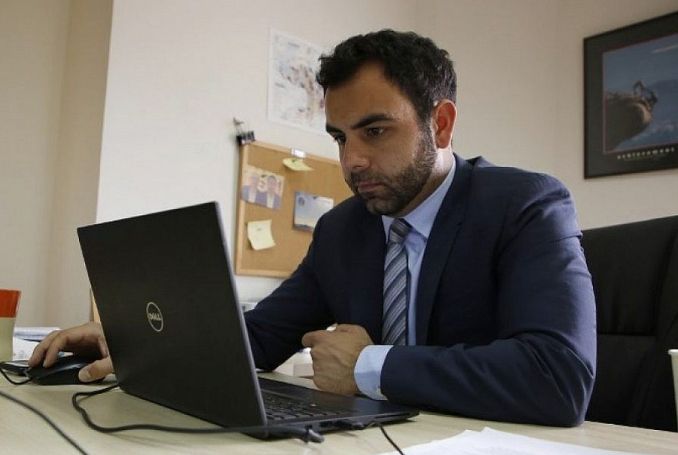
Senior Human Rights Watch staff resign after leadership blocks report on Israel’s denial of Palestinian refugees’ right of return.
Key Takeaways
- HRW’s Israel–Palestine director Omar Shakir and researcher Milena Ansari resigned after a finalized report was blocked from publication.
- The suppressed report reportedly classified Israel’s denial of refugee return as a crime against humanity under international law.
- More than 200 HRW staff protested the decision internally, warning of damage to the organization’s credibility.
- HRW leadership cited “complex legal issues,” while authors say the report cleared all review procedures.
- The resignations come amid heightened scrutiny of HRW’s Palestine work under new executive leadership.
Human Rights Watch (HRW) is facing a significant internal crisis after the resignation of two senior staff members in protest over the organization’s decision to block a report addressing Israel’s long-standing denial of Palestinian refugees’ right of return.
According to reporting by Jewish Currents, Omar Shakir, HRW’s Israel–Palestine director, and Milena Ansari, an assistant researcher, stepped down after leadership halted the publication of a report they say had already completed the organization’s full review process.
The unpublished 33-page report reportedly concluded that Israel’s prevention of Palestinian refugees from returning to their homes constitutes a crime against humanity under international law.
In his resignation letter, Shakir wrote that the decision marked a fundamental break from HRW’s established procedures and principles. He said the move reflected fear of political backlash rather than concerns over legal rigor or factual accuracy.
“I have lost my faith in the integrity of how we do our work and our commitment to principled reporting on the facts and application of the law,” Shakir wrote, according to the leaked correspondence.
I've resigned from @hrw after 10+ yrs—most as Israel/Palestine Director—after HRW's new ED pulled a finalized report on the right of return for Palestinian refugees on eve of its release & blocked for weeks its publication in a principled way. Full story: https://t.co/npbjjwBqf5
— Omar Shakir (@OmarSShakir) February 3, 2026
A Report Years in the Making
The blocked report examined the experiences of Palestinian refugees displaced from Gaza, the occupied West Bank, and refugee communities across Lebanon, Jordan, and Syria. It traced how Israel’s decades-long refusal to allow their return — despite clear protections under international law — has produced ongoing displacement across generations.
Shakir said the report underwent seven months of internal review, including approval by HRW’s Middle East and North Africa division, multiple legal specialists, the Program Office, and the Law and Policy Office. He noted that the report had already been coded for publication, translated, and accompanied by a vetted press release and briefing materials.
“Hardly a rush,” Shakir wrote in a public statement responding to HRW leadership’s claims that further review was needed.
Both Shakir and Ansari said attempts by leadership to narrow the report’s scope to only recent displacements would undermine its core legal findings and erase the historical continuity of Palestinian refugee dispossession.
Milena Ansari, @hrw's indefatigable researcher in Jerusalem, has also resigned. The two of us made up the organization’s Israel/Palestine team. Our last day was yesterday. See the @guardian's account: https://t.co/rEXpnujxEE
— Omar Shakir (@OmarSShakir) February 3, 2026
Internal Backlash within HRW
The decision sparked internal dissent within Human Rights Watch. More than 200 staff members reportedly signed a letter urging leadership to release the report, warning that blocking it would severely damage the organization’s credibility and independence.
Critics inside HRW argue that the refusal to publish reflects a persistent institutional hesitation to fully apply international law to Israel’s policies toward Palestinian refugees — even as the organization has increasingly acknowledged Israeli crimes in Gaza, including war crimes and crimes against humanity.
The controversy has unfolded as HRW transitions to new leadership under executive director Philippe Bolopion, who assumed the role amid growing pressure on the organization’s handling of Israel–Palestine reporting.
Israel Orders Doctors Without Borders to Halt Gaza Operations by February 28
HRW’s Official Response
In a public statement, HRW said the report raised “complex and consequential issues” and required additional scrutiny to meet the organization’s standards. Leadership denied that political considerations influenced the decision, stating that the publication was paused pending further analysis.
However, Shakir warned that continued revisions risked diluting or shelving the report entirely. He expressed concern that the leadership’s approach could lead to the removal of core legal conclusions — particularly those addressing the right of return, one of the most contested issues in the Israeli–Palestinian context.
‘Persona Non Grata’ – South Africa Orders Israeli Diplomat to Leave Within 72 Hours
Right of Return Remains a Red Line
While Human Rights Watch has in recent years adopted stronger language on Israel’s system of apartheid and its actions in Gaza, the right of return remains a particularly sensitive issue. Supporters of Israel frequently argue that allowing Palestinian refugees to return would undermine the state’s Jewish demographic majority — a position that critics say conflicts with international law.
Shakir emphasized that the denial of return is not a peripheral issue but a central pillar of Palestinian dispossession. He argued that failing to address it consistently reflects a deeper reluctance within parts of the international human rights establishment to confront the full legal implications of Israel’s policies.
“The one issue where even Human Rights Watch still hesitates to apply the law fully is the Palestinian refugee question,” Shakir said.
Israel Cancels Rafah Evacuation for Third Batch of Patients amid Renewed Massacres
Broader Implications
The resignations come at a moment when international scrutiny of Israel’s actions is intensifying, particularly amid continued Israeli genocide in Gaza despite a ceasefire agreement, mounting civilian casualties, and renewed debates over accountability.
Observers say the episode raises serious questions about the independence of major human rights organizations and their vulnerability to political pressure — especially when reporting on Israel and Palestine.
For critics, the blocked report and subsequent resignations underscore a long-standing concern: that while violations against Palestinians are increasingly acknowledged, certain foundational injustices — particularly the right of return — remain treated as untouchable.
(Anadolu, AJA, PC)






If Human Rights Watch were to endorse the vision of “A Land For All/Two States One Homeland”, then the right of return would not be a population time bomb. Because under that plan, Palestinians in Israel would vote in Palestine and Jews in Palestine would vote in Irael.
There’s alegal dictum – pacta sunt sevanda – agreements must be upheld – which applies here. Israel agreed to allow the Palestinian refugees to return as its price of admission to the United Nations Organization. Since it has held this agreement in contempt, all and any agreement with Israel is due the exact same treatment. Or in other words, all and every treaty made with Israel may be repudiated without penalty, whatsoever, since Israel ever since 1948 has shown it is incapable of upholding agreements.