

Iran offered to reopen the Strait of Hormuz within seven days if Washington lifts its blockade and eases military pressure on Tehran.
Key Takeaways
- A senior Iranian official told Reuters news agency that Tehran could reopen the Strait of Hormuz within seven days if Washington eases military pressure and lifts its blockade on Iranian ports.
- Iran’s delegation at the UN General Assembly has authority to pursue diplomacy through mediators, though President Masoud Pezeshkian is not expected to meet President Donald Trump.
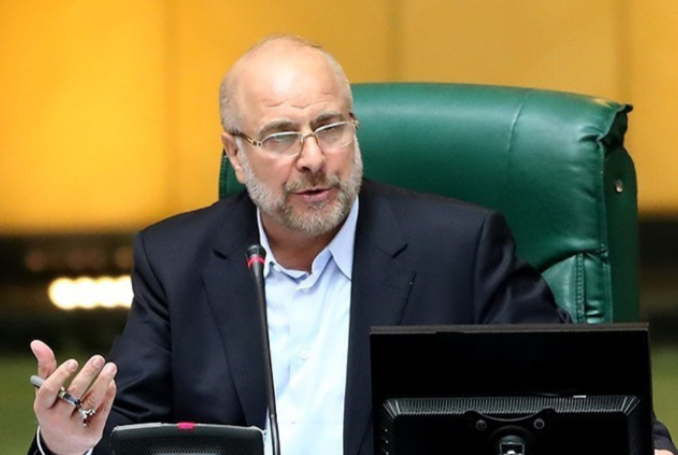
- Parliament Speaker Mohammad Bagher Ghalibaf said Iran would “never surrender,” warning that its missiles can now reach any target Tehran chooses.
Iran Offers Path to Reopen Hormuz
Iran could reopen the Strait of Hormuz within seven days if the United States eases military pressure and lifts its blockade on Iranian ports, a senior Iranian official told Reuters news agency on Tuesday.
The official said Washington would first need to formally demonstrate that it wanted a diplomatic resolution and agree on a timeline for moving the process forward.
Tehran’s proposal to end hostilities was delivered to Washington through mediators on September 16, according to the official. Iran’s delegation attending the UN General Assembly in New York has been given full authority to revive diplomacy with the United States.
Iran Warns US, Israel of ‘Destructive Response’ as Ansarallah Rejects Saudi War
“The UN General Assembly is a golden opportunity for the US to return to diplomacy,” the official told Reuters, adding that Tehran would welcome renewed diplomacy if Washington took tangible steps.
Pezeshkian, who traveled to New York on Tuesday, is not expected to meet Trump at UN headquarters, the official said.
The proposal comes amid renewed military tensions. Iran’s military central command said Sunday that it had received information that Washington was preparing to resume military operations with support from regional countries and warned that Tehran would respond “without limitations and considerations.”
‘We Will Never Surrender’
The diplomatic opening came as Ghalibaf emphasized Iran’s military capabilities and warned that Tehran would continue confronting what he described as a “composite war” waged by the United States.
Speaking during a ceremony honoring veterans of Iran’s 1980-1988 war with Iraq, Ghalibaf said the country’s missile capabilities had fundamentally changed since that period.
“We have today reached a stage where we are able to target any point we want with our missiles, without restrictions,” Ghalibaf said.
“During the years of the Sacred Defense, the enemies would not even sell us barbed wire, the range of our artillery did not exceed 14 to 15 kilometers, and artillery shells were subject to rationing, but the culture of the Sacred Defense has brought us today to these missile capabilities,” he added.
Ghalibaf said Iran faced pressure across military, economic and diplomatic fronts but would “never surrender.”
Addressing Trump, he said the US president was confronting “a historic civilization and a national and religious resistance.”
“He must know that he cannot impose his power on the Iranian nation and Armed Forces,” Ghalibaf said.
Iran Sets Seven Conditions for US Talks, Says Previous Negotiating Terms Are Over
‘Negotiations Are Also an Arena of Struggle’
Ghalibaf also presented diplomacy and military resistance as complementary rather than contradictory.
“Let the enemy know that negotiations are also an arena of struggle,” he said.
Diplomacy, he added, did not amount to surrender but was a means of “turning the power of the battlefield into a political achievement.”
Pezeshkian struck a similar note before departing for the UN General Assembly, saying he would use the gathering to present Iran’s position and address the impact of the war.
“We will present and strongly defend Iran’s positions in international forums, and we will convey the message of the Iranian people to the world,” he said.
The Iranian president also pointed to Tehran’s previous negotiations, saying, “We sat at the negotiating table several times, and we signed agreements, but the world saw how the other side broke its promises and violated the terms.”
Pezeshkian said Iran would continue defending its territory and principles, while Tehran’s latest proposal leaves open a diplomatic channel through mediators during this week’s meetings in New York.
The potential reopening of Hormuz has already had wider economic implications. The strait handled roughly one-fifth of global oil and liquefied natural gas supplies before the US-Israeli war against Iran began in February, and oil prices fell to a two-week low Tuesday following Tehran’s latest proposal.
(PC, Reuters, Al Mayadeen, Iranian media)



Be the first to comment