
Israel is advancing 2,300 settlement units south of occupied Jerusalem as settler attacks and attempts to seize Palestinian property intensify.
Key Takeaways
- Israeli occupation authorities are preparing to advance approximately 2,300 new units in the illegal Gilo settlement on 195 dunams of Palestinian land.
- The project would connect Gilo with Givat Hamatos and Har Homa, further separating occupied Jerusalem from Bethlehem and the southern West Bank.
- At least 28 dunams targeted by the project were reportedly seized through Israel’s so-called Absentee Property Law and subsequently designated for settlement expansion.
- Meanwhile, illegal Israeli settlers continued their siege of three Palestinian families in Qusra for a sixth consecutive day amid fears that their homes could be seized.
2,300 New Settlement Units
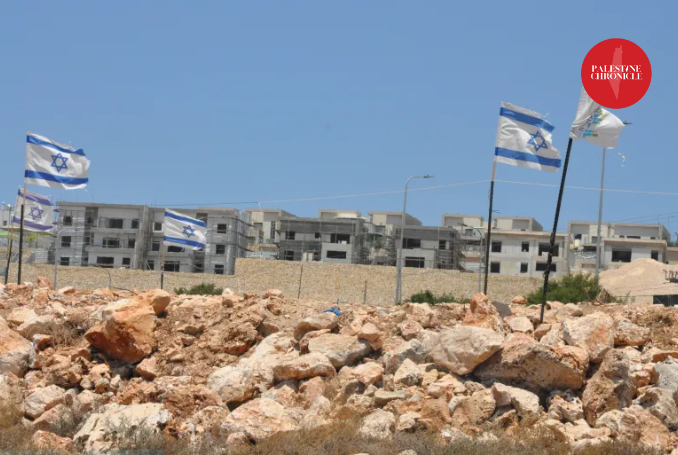
Israeli occupation authorities are preparing to advance a major settlement plan involving approximately 2,300 new units in the illegal Gilo settlement, built on Palestinian land south of occupied Jerusalem.
The project covers an estimated 195 dunams and would push settlement construction further south, threatening to deepen the geographical separation between occupied Jerusalem, Bethlehem and the southern occupied West Bank.
The targeted land lies above the tunnel road along Route 60, a major transportation artery connecting Jerusalem with Bethlehem and other Palestinian cities in the southern West Bank.
Israeli Defence Minister Israel Katz praised the Hilltop Youth settlers for ‘holding on to’ occupied Palestinian land. Israeli settlers have moved into Ganim, an illegal West Bank settlement dismantled by Israel in 2005. pic.twitter.com/FKO9da3XIY
— Al Jazeera English (@AJEnglish) August 14, 2026
The project is designed to expand Gilo toward the illegal settlements of Givat Hamatos and Har Homa, creating greater territorial continuity between Israeli settlements south of Jerusalem.
If implemented, the plan would further surround Palestinian communities with settlement construction while restricting their ability to expand geographically.
The development comes amid a broader acceleration of settlement plans in occupied East Jerusalem, where Israeli occupation authorities have recently advanced thousands of additional housing units.
Palestinian Land Seized under ‘Absentee Property’ Law
The settlement project was preceded by a series of legal and administrative measures through which Palestinian land was transferred into Israeli control.
According to Palestinian data, at least 28 dunams within the area covered by the plan were confiscated under Israel’s so-called Absentee Property Law.
The properties were initially transferred to the Israeli Custodian of Absentee Property before later being classified as “state lands” and allocated for settlement-related development.
Israel has repeatedly used legal and administrative mechanisms to transfer Palestinian property into state or settler control across occupied East Jerusalem and the West Bank.
Israeli settlements in occupied Palestinian territory are illegal under international law.
Olive Groves under Threat
The planned expansion also threatens Palestinian agricultural land, including olive groves and mature fruit trees, some of which have been cultivated by local families for decades.
Implementation of the project could involve bulldozing extensive agricultural areas and uprooting hundreds of trees.
Israel advances major colonization projects in East Jerusalem ahead of legislative vote
——
The Israeli government has advanced three large-scale settlement expansion projects across East Jerusalem encompassing over 3,400 housing units. Human rights monitors note the fast-tracked… pic.twitter.com/VmiVF2cpLn— The Cradle (@TheCradleMedia) August 10, 2026
For Palestinian families and farmers dependent on the land, the losses would compound existing restrictions on their ability to reach, cultivate and develop their property.
Gilo itself was established following Israel’s occupation of East Jerusalem and the West Bank in 1967 and expanded on lands belonging to Palestinian communities including Beit Safafa, Sharafat and Beit Jala.
The latest project would extend that settlement footprint further toward the south.
Settlement Belt around Jerusalem
The significance of the plan extends beyond the construction of additional housing units.
Connecting Gilo more closely with Givat Hamatos and Har Homa would contribute to a contiguous Israeli settlement belt across southern occupied Jerusalem.
Such construction would further separate Palestinian neighborhoods in Jerusalem from Beit Jala, Bethlehem and other communities in the southern West Bank while limiting space available for Palestinian urban development.
The project therefore forms part of a broader settlement geography increasingly fragmenting Palestinian territorial continuity around occupied Jerusalem.
Qusra Families Remain under Settler Siege
Meanwhile, illegal Israeli Jewish settler attacks and attempts to seize Palestinian property continued elsewhere in the occupied West Bank.
Three Palestinian families in the Ras al-Ain area of Qusra, south of Nablus, remained under settler siege for a sixth consecutive day on Friday.
Settlers again erected a tent directly in front of the families’ homes before Israeli forces removed it for the second time in two days.
Despite the tent’s removal, illegal settlers continued restricting the families’ movement and access to basic necessities while Israeli soldiers and military vehicles remained deployed around the area.
Since Sunday, dozens of settlers have reportedly blocked roads leading to the three homes, prevented deliveries of food, water and medicine, and cut electricity and water lines.
Local sources said settlers began attempting to take control of the properties approximately four months ago, fueling fears that the current siege is intended to force the families from their homes.
Qusra under Curfew as Israeli Forces Evacuate Palestinians amid Settler Attacks
Palestinian Homes Turned into Military Barracks
The settler siege has unfolded alongside a major Israeli military operation in Qusra.
Hundreds of Israeli soldiers stormed the town on Thursday, with the military informing the village council that the operation would continue until Sunday morning, reportedly under the pretext of dismantling a settler outpost.
During the operation, Israeli occupation forces seized 16 Palestinian homes and converted them into temporary military positions before withdrawing from them on Friday morning.
The military deployment came even as the Palestinian families at the center of the settler siege remained unable to move freely.
Israeli raids also continued elsewhere across the occupied West Bank.
Four Palestinians were detained during raids in Nablus early Friday, while Israeli occupation forces detained 14-year-old Muhammad Ziad al-Rajoub in the village of Al-Koum, southwest of Hebron (Al-Khalil).
Settlers separately attacked Palestinians southwest of Hebron, while Israeli forces stormed Al-Mazra’a al-Gharbiya and Deir Abu Mash’al, northwest of Ramallah.
The developments come amid accelerating settlement expansion, military raids and settler attacks across the occupied West Bank, increasingly accompanied by attempts to seize Palestinian land and homes and restrict residents’ movement.
(PC, QNN, Palestinian media)