
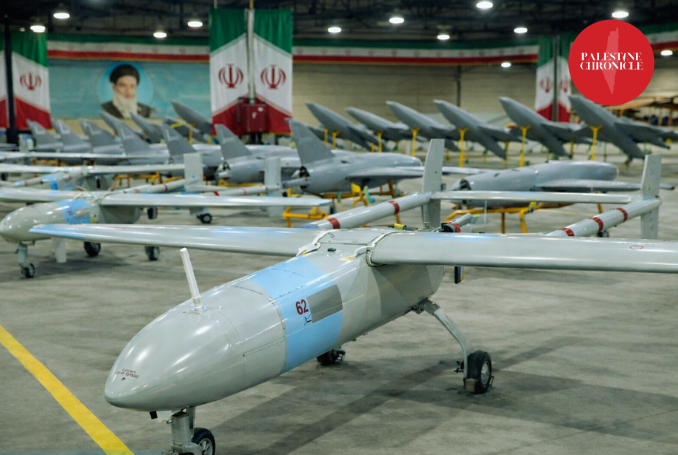

Drone warfare is exposing deep vulnerabilities in US military doctrine, raising concerns about survivability and heavy losses in future wars.
Key Takeaways
- Analysis warns modern drone warfare removes traditional US battlefield advantages, exposing troops to constant, inescapable threats across all environments.
- Former US Air Force pilot Nolan Peterson describes conditions where soldiers are “never out of danger,” highlighting severe psychological strain.
- Peterson cautions future wars could impose heavy, potentially unsustainable losses on US forces against advanced adversaries such as China.
‘No Safe Places’
Drone warfare is reshaping modern conflict and exposing structural limits in US military power, according to an analysis by Nolan Peterson, a former US Air Force Special Operations pilot and nonresident senior fellow at the Atlantic Council, published in the Washington Post on Friday.
Drawing on his experience both as a combat pilot in Iraq and Afghanistan and later as a journalist reporting from Ukraine, Peterson highlights a fundamental transformation in the nature of war—one that eliminates the concept of safety even far from the front lines.
Reflecting on his earlier military service, he describes a system in which danger was intense but contained, and where soldiers could withdraw from combat zones into relatively secure environments.
After missions, he recalls, he could “hit the gym, grab a bite from Subway or Burger King, and stop by my squadron’s plywood hut to watch a movie and hang out with friends.”
This contrast, he suggests, no longer holds: “As a journalist in Ukraine, I experienced a very different war. A war with no safe places. A war where you can be killed at any time.”
The psychological impact of such conditions, he adds, is profound and persistent, noting that “the psychological toll of such constant proximity to death, for months or even years on end, can be paralyzing.”
US C-RAM air defense system failed to intercept Iranian suicide drones in the sky of Erbil.
Follow: https://t.co/mLGcUTS2ei pic.twitter.com/YNrLecFS9x
— Press TV 🔻 (@PressTV) March 5, 2026
‘You’re Being Hunted’
At the center of this transformation is the rapid proliferation of drone technology, which has fundamentally altered the calculus of survival on the battlefield.
Peterson explains that traditional threats such as artillery, while deadly, followed patterns that soldiers could learn to navigate. “The dangers of an artillery war are largely mathematical,” he wrote, noting that survival often depended on positioning, timing, and discipline.
However, drones introduce a radically different dynamic.
“But drones have changed the calculus,” he wrote. “When the enemy is deploying drones, it feels like you’re being hunted.”
Unlike unguided weapons, drones are controlled by human operators who can track, pursue, and adapt in real time.
“It’s like having a sniper always following,” Peterson added. “But unlike snipers, drones pursue you through open doorways and around corners.”
The result is a constant state of exposure, where hiding is temporary and movement itself becomes dangerous.
A Ukrainian soldier described the experience in stark terms: “In the first war, from 2014 to 2015, at least you felt you had a fighting chance to survive. This time it’s a fifty-fifty chance of coming back. The drones can always see you. You’re never out of danger.”
Structural Limits of US Warfare
Beyond the technological shift, Peterson’s analysis raises deeper concerns about the structural foundations of US military power.
He argues that recent US wars—particularly in Iraq and Afghanistan—were fought under conditions of overwhelming strategic advantage, including air superiority, secure logistics, and fortified bases that provided protection and recovery between missions.
These conditions, he suggests, created an operational model that may no longer be viable in future conflicts against advanced adversaries.
“Against a modern adversary such as China, U.S. troops would be in constant danger, even far away from the front line,” Peterson wrote.
This represents a fundamental departure from the assumptions that have underpinned US military planning for decades.
🇮🇷💥🇺🇲 Analysis of satellite imagery and verified video suggests that at least 10 radar sites used by the US and allies have been hit by Iranian drones or missiles since the war began. pic.twitter.com/ZpPhMEyC5j
— Tibo91 (@Tibortibor15) March 20, 2026
No Guarantees
Peterson also challenges the assumption that US technological superiority—particularly in air power—can guarantee battlefield dominance.
While acknowledging the destructive capability of advanced aircraft, he emphasizes their limitations in the evolving landscape of drone warfare.
“American F-35s and B-2s may still crush an enemy’s air force,” he wrote, “but that doesn’t mean command of the low-altitude airspace where small, tactical drones fly.”
This distinction highlights a critical vulnerability: control of the skies at high altitude does not equate to control of the battlefield below, where small, inexpensive drones operate.
As a result, even technologically superior forces may find themselves unable to fully secure their own positions.
Unsustainable Defense
The analysis also points to a growing imbalance between the cost of defense and the cost of attack.
Peterson notes that recent developments, including those observed in Iran, demonstrate the difficulty of countering large numbers of low-cost drones using expensive, high-end air defense systems.
He writes that “the past two weeks in Iran have highlighted the unsustainability of burning through stocks of high-end air defenses — best for downing missiles and manned warplanes — to combat relatively cheap Shahed drones.”
This dynamic raises serious concerns about long-term sustainability in a prolonged conflict.
“If we repeat this mistake in a war with China, the toll will be catastrophic,” he wrote.
(PC, Washington Post)