
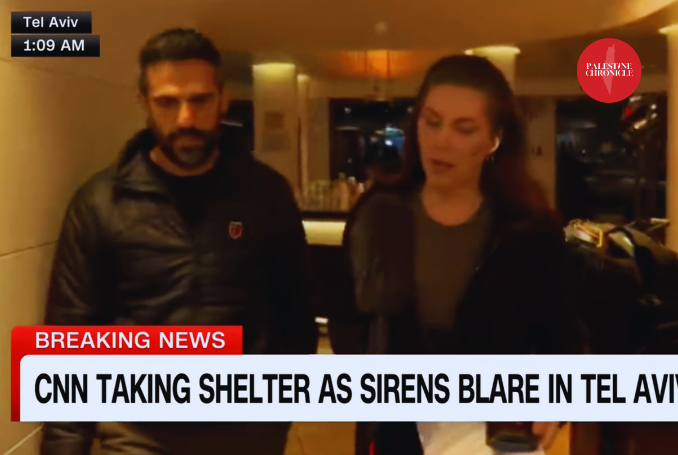

A CNN broadcast from Tel Aviv was interrupted by missile sirens, revealing the reality of Iranian strikes despite Israeli censorship.
Key Takeaways
A live CNN broadcast from Tel Aviv was interrupted by missile sirens, forcing anchor Erin Burnett and her crew to take shelter on air.
The incident provided a rare real-time glimpse of Iranian missile alerts inside Israel, which are normally tightly controlled by Israeli military censorship.
Burnett acknowledged during the broadcast that censorship limits what journalists can report about where missiles land or the extent of the damage.
The interruption came hours after Iran launched Wave 37 of Operation “True Promise 4,” which Tehran described as one of the war’s most intense missile barrages.
Israeli media reported sirens and explosions across central Israel following the launches, though details about impacts remain restricted.
Broadcast Interrupted
A live broadcast by CNN anchor Erin Burnett from Tel Aviv was abruptly interrupted early Tuesday when missile sirens sounded across the city, forcing the journalist and her crew to rush to a secure shelter while still on air.
The incident, which occurred during a discussion about the US-Israeli aggression on Iran, offered a rare glimpse into the impact of Iranian missile strikes inside Israel—an issue that remains heavily controlled by Israeli military censorship.
🚨 BREAKING: 🇮🇱 CNN’s Erin Burnett takes shelter in Tel Aviv after missile sirens sound during a live conversation with Fred Pleitgen in Tehran.pic.twitter.com/hVXUlLHC9p
— Global Affairs 24 (@GlobalAffair24) March 11, 2026
Burnett was speaking live at around 1 AM local time from Tel Aviv during her program Erin Burnett OutFront when she warned viewers that her team had just received an early alert about possible incoming missiles.
“Usually those early warnings do mean sirens and missiles, but not always,” she said at the beginning of the segment, adding that it remained unclear whether the warning would turn into an actual strike.
Minutes later, the warning became reality.
As Burnett began interviewing Major General Randy Manner, a former vice chief of the US National Guard Bureau, missile sirens began blaring across Tel Aviv. The anchor and CNN reporter Jeremy Diamond quickly gathered their equipment and moved toward a nearby shelter while the broadcast continued.
“Alright, so Jeremy and I are, obviously, we’re having trouble hearing because we have the sirens going on here as we are going to seek shelter,” Burnett told viewers while walking toward a protected stairwell.
Rare Glimpse into a Restricted Reality
The live evacuation highlighted a rarely seen aspect of the war: the extent to which Iranian missiles have reached Israeli territory.
Israeli authorities impose strict censorship rules that limit reporting on the location and scale of missile impacts. Journalists often cannot reveal where strikes land or the extent of the damage, particularly when it involves military or strategic sites.
Burnett herself acknowledged the restrictions during the broadcast.
“We’ll be able to figure out exactly what we’re able to tell you about what happened and where they landed obviously, with some of the censorship,” she said after the alert ended.
Most Intense Attack: Iran’s Wave 37 Pounds Israel for Three Hours
Wave 37
The latest developments come after Iran carried out what it described as one of its most intense missile operations of the war overnight.
According to the IRGC, Wave 37 of Operation True Promise 4 lasted roughly three hours and involved multiple salvos of heavy ballistic missiles targeting Israeli and US-linked positions across the region.
Iran said the attack relied on powerful systems such as the Khorramshahr, Kheibar, and Qader missiles, some carrying warheads weighing about one ton, reflecting what Iranian officials describe as a shift toward heavier and more destructive payloads.
Israeli media reported air raid sirens sounding across central Israel, including Tel Aviv, following the launches, with reports of explosions in the area. However, the extent of damage remains unclear due to Israeli military censorship that restricts reporting on missile impacts and sensitive sites.
The strikes occurred amid a broader regional escalation that has also included drone and missile operations targeting US-linked infrastructure in Iraq and rocket attacks reported near the Lebanese border.
Together, these developments underscore the widening scope of the confrontation between Iran, Israel, and the United States as missile exchanges and regional operations continue to intensify.
(PC, CNN)



Hmmm…why would they show us that Israel is vulnerable. All i can think of right now is the faked CNN broadcasts ” live from Iraq ” , but it was a hoax.
interesting, if true.
Because Israeli media i.e. Haaretz and J. Post has already reported it. That doesn’t mean that CNN is as Israel-biased as usual: it is. Legacy media i.e. older American have been “flying blind” on Israel-Palestine-Iran for decades and that hasn’t changed now.