

By Romana Rubeo 
The Palestine Chronicle launches Thinking Palestine, a new platform dedicated to rigorous analysis, scholarship, and critical engagement.
The Palestine Chronicle has launched Thinking Palestine, a new platform dedicated to rigorous analysis and deeper reflection on the Palestinian struggle.
The initiative emerges at a time of rapid political, social, and military transformation, where developments unfold at a pace that increasingly limits opportunities for sustained interpretation. In this context, the project aims to provide a structured space for critical engagement grounded in both immediacy and depth.
Developed in coordination with the European Centre for Palestine Studies (ECPS) at the University of Exeter, the platform brings together academic research and journalistic practice to examine unfolding realities in Palestine and beyond.
Institutional Context
Founded in September 1999, The Palestine Chronicle has long positioned itself as a forum addressing issues of human rights, national struggles, freedom, democracy, and culture.
Its work spans daily news reporting, in-depth commentary, feature writing, and multimedia production, with a consistent focus on connecting current developments to their broader historical and political contexts.
The ECPS, established in 2009 by Ilan Pappé and Ghada Karmi, operates as an interdisciplinary research center focused on Palestine. Based at the University of Exeter, it emphasizes academic rigor, decolonial approaches, and scholar-activism.
The collaboration between the two institutions forms the foundation of Thinking Palestine.
Bridging Journalism, Scholarship
According to the project’s framework, Thinking Palestine is conceived as a space where urgent developments are not only documented but critically examined and contextualized.
While The Palestine Chronicle has historically combined reporting with analysis, the new platform introduces a more structured approach to intellectual inquiry, reflecting the need for sustained engagement amid accelerating events.
The initiative seeks to bridge the gap between scholarship and journalism by creating a forum where both intersect, allowing for more comprehensive interpretations of ongoing developments.
Thematic Structure
Each edition of Thinking Palestine will be organized around a central theme, enabling focused exploration of key political, cultural, and historical questions.
These thematic issues will be developed in collaboration with academic institutions, research networks, and independent contributors, ensuring a balance between scholarly depth and accessibility.
Contributors will include scholars, researchers, journalists, analysts, and historians, offering diverse perspectives on Palestine as both a lived reality and a global political issue.
Editorial Approach
The platform is grounded in the editorial principles that define The Palestine Chronicle, including independence, intellectual integrity, and a commitment to fact-based discourse.
It aims to provide a space free from partisan affiliation, where complex ideas can be examined in relation to realities on the ground.
At its core, Thinking Palestine is presented as both a continuation and an expansion of The Palestine Chronicle’s work—extending its analytical dimension while opening a dedicated space for deeper, collective reflection.
Broader Objective
Through this initiative, the platform seeks to contribute to a wider intellectual project focused on challenging dominant narratives and advancing historically grounded understandings of Palestine.
By amplifying critical voices and fostering interdisciplinary dialogue, Thinking Palestine aims to engage with the present moment while situating it within broader historical and political frameworks.
The platform is now live and open for participation.
(The Palestine Chronicle)
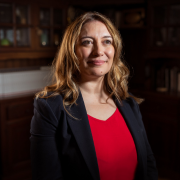
– Romana Rubeo is an Italian writer and the managing editor of The Palestine Chronicle. Her articles appeared in many online newspapers and academic journals. She holds a Master’s Degree in Foreign Languages and Literature and specializes in audio-visual and journalism translation.

If I might make a suggestion – across the world, get Palestinian musicians involved with the world-wide Palestine Solidarity movements. Make Palestinian songs a must-have on student radio, independent radio, internet radio, etc. Everywhere where people listen to music, get Palestinian music played. And get other musicians involved as well – it will help combat the effort expended by the usual suspects to typecast Palestinians as monomaniacal terrorists.