
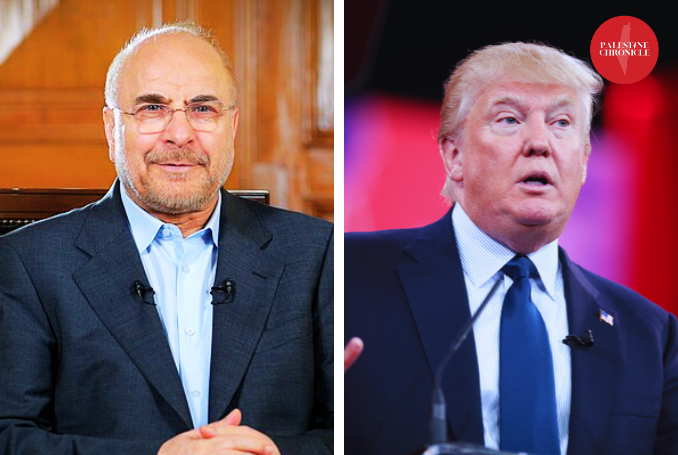

Iran says it is “still far from a final agreement” as talks continue, insisting key demands cannot be compromised.
Key Developments
- Iran insists it will maintain control over the Strait of Hormuz and rejects negotiations under US naval blockade.
- Indirect communication between Tehran and Washington continues through Pakistani mediation after stalled talks.
- Donald Trump confirms US officials will travel to Islamabad to resume negotiations with Iran.
Iran Reasserts Control
Iranian officials have reiterated that control over the Strait of Hormuz remains a central issue in both the military and diplomatic tracks of the ongoing standoff.
Vice President Mohammad Reza Aref said that “the management and supervision of the Strait of Hormuz must be in Iran’s hands,” stressing that Tehran will “maintain its gains, especially in the Hormuz region.”
Aref described the Iranian negotiating team as acting with “courage and wisdom” in defending national interests, adding that public mobilization has played a decisive role in strengthening Iran’s position.
“The presence of people in the squares was the main factor in overcoming crises,” he said, noting that this support “forms a strong asset for negotiations.”
He also emphasized Iran’s internal capabilities, stating that the country’s “ability to resist and build is very high,” while criticizing opposing parties in the negotiations, saying their positions are “immature and fluctuating.”
According to Aref, other parties tend to push for ceasefires and negotiations under pressure, but later adopt more rigid positions, complicating the negotiation process.
He further stated that sanctions imposed on Iran have “practically lost their effect,” signaling Tehran’s position that economic pressure is no longer a decisive factor.
These statements come amid earlier remarks by Iranian officials indicating that developments in the Strait of Hormuz are directly tied to the broader confrontation with the United States.
Pezeshkian Defends Iran’s Response as Self-Defense, Urges Unity, Slams US, Israel
No Talks under Blockade
Iran has consistently maintained that no formal negotiations can proceed while the US naval blockade remains in place, linking diplomatic progress to changes in maritime restrictions.
In this context, Mehdi Tabatabaei, assistant to the Iranian president for public relations, said that the “mistakes and crimes” of Iran’s adversaries have contributed to the emergence of a “new system governing the Strait of Hormuz.”
The remarks follow an announcement by the public relations office of the Islamic Revolutionary Guard Corps (IRGC) Navy that the Strait of Hormuz would be closed until the blockade on Iranian ports and ships is lifted.
The IRGC Navy said the decision came after violations of ceasefire conditions and the continued enforcement of the US naval blockade on Iranian maritime activity.
This linkage between maritime access and negotiations has remained a consistent element of Iran’s position, shaping both its public statements and its diplomatic engagement.
Pakistan: Indirect Messaging
Despite the lack of direct negotiations, communication between Iran and the United States has continued through indirect channels.
According to Tasnim News Agency, the exchange of messages between Tehran and Washington has resumed in recent days through Pakistani mediation, following the conclusion of the first round of talks.
The report described the process as part of the same negotiation track that accompanied earlier discussions, which ended without significant results.
It added that the Pakistani mediator had resumed relaying messages between the two sides after negotiations were suspended, maintaining a channel for communication despite the impasse.
Iranian officials have reiterated that any discussion of formal negotiations remains contingent on the lifting of the US naval blockade.
At the same time, diplomatic engagement has continued at the regional level. Iranian and Pakistani foreign ministers discussed recent developments during a phone call, reflecting ongoing coordination amid the mediation process.
‘Unstable and Insulting’: WSJ Explains Trump’s Erratic Approach before Ceasefire
Partial Progress
Iranian officials have indicated that while some progress has been made in discussions, significant gaps remain unresolved.
Iranian Parliament Speaker Mohammad Baqer Qalibaf said that “some topics in the negotiations with the Americans have reached conclusions and results, while others have not,” emphasizing that “we are still far from a final agreement.”
He stressed that Iran continues to insist on certain demands that “cannot be compromised,” adding that the responsibility now lies with Washington to build trust.
“If they want to respond in good faith, they must abandon the spirit of unilateralism,” Qalibaf said.
These remarks reflect Iran’s position that negotiations remain incomplete and conditional, despite ongoing indirect exchanges.
New Round of Talks
As indirect communication continues, the United States has moved to restart formal negotiations.
US President Donald Trump said that American representatives are expected to travel to Islamabad to take part in a new round of negotiations, indicating that Washington still believes an agreement with Iran is achievable, whether through a smooth process or a more difficult path.
In separate remarks, Trump described the US proposal as fair and reasonable, expressing hope that Tehran would accept it.
He confirmed that his Middle East envoy, Steve Witkoff, would travel to Pakistan as part of the effort to restart talks aimed at ending the war with Iran.
Trump also indicated that Jared Kushner would be involved in the negotiations, portraying him as an experienced figure in Middle East diplomacy.
Initial reports suggested that Vice President J.D. Vance might lead the delegation, but Trump later clarified that Vance would not travel to Pakistan, citing security considerations.
925 Days of War: What Has Israel Achieved beyond Endless Destruction?
Conflicting Claims
Alongside the diplomatic developments, conflicting claims have emerged regarding ceasefire violations and activity in the Strait of Hormuz.
Trump accused Iran of violating the ceasefire, claiming that Iranian forces had opened fire in the Strait of Hormuz and targeted a French and a British vessel.
He also said that Iran’s announcement of its intention to close the strait comes at a time when the waterway is “effectively closed” due to US measures.
Trump further claimed that Iran is incurring economic losses as a result of these developments, while the United States is benefiting from shifts in global energy routes.
Iranian officials have rejected such claims.
Former Foreign Minister Ali Akbar Velayati said that “the era of imposing security from beyond the oceans has ended,” adding that the security of key maritime routes now depends on “Iran and its strategic partners.”
UPDATE: No Talks
In a separate development, Iran’s official IRNA news agency denied reports that a second round of negotiations would be held in Islamabad, describing such claims as “incorrect.”
IRNA said that what it described as US “unreasonable demands,” alongside continued naval blockade measures and ongoing threats, have obstructed progress in the talks so far.
The agency added that no clear path toward meaningful negotiations is currently visible under these conditions, while dismissing US narratives about the talks as part of a broader media pressure campaign against Iran.
(Iranian Media, US Media, Al Mayadeen, X)




“Jared Kushner would be involved in the negotiations, portraying him as an experienced figure in Middle East diplomacy”??? What?? Immature and fluctuating, indeed! A through Vance just reduced the “intelligent” quota.