
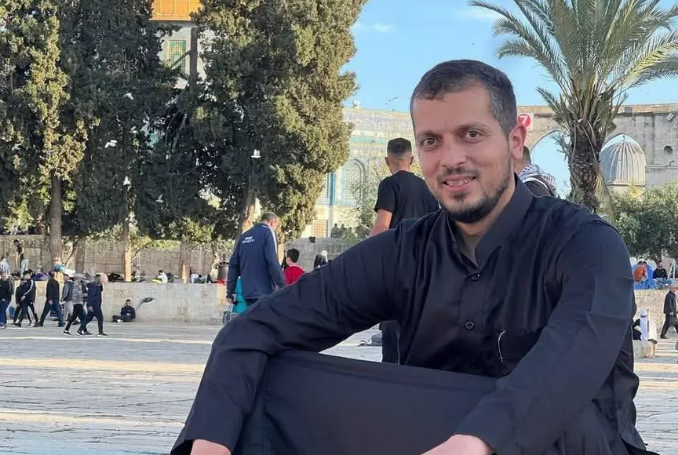

The Palestinian Authority arrested former detainee Abdul Rahman Ishtayeh three months after his release following nearly ten years in Israeli prisons.
Key Developments
- The PA intelligence service arrested Abdul Rahman Ishtayeh after summoning him for questioning in Nablus, according to a prisoners’ families committee.
- Ishtayeh was released from Israeli detention around three months ago after nearly ten years, including 32 months under administrative detention.
- The committee accused the PA of pursuing a “revolving door” policy in which Palestinians face successive detention by PA and Israeli forces.
Arrested Three Months after Release
The Palestinian Authority’s intelligence service in Nablus arrested former detainee Abdul Rahman Ishtayeh only around three months after his release from Israeli prisons, according to the Committee of Families of Political Prisoners in the West Bank.
Ishtayeh, from the town of Salem, east of Nablus, was summoned for questioning before being arrested on Monday morning, the committee said.
He had spent nearly ten years in Israeli detention, including 32 months under administrative detention — imprisonment without charge or trial that can be renewed repeatedly by Israeli military authorities.
According to the committee, Ishtayeh was subjected to beatings and other forms of abuse during his detention.
The group said he had also previously been detained by PA security services and described his latest arrest as part of an ongoing pattern of politically motivated detention targeting former Israeli detainees.
It demanded his immediate release along with that of all Palestinians it considers political detainees in PA prisons.
Committee Denounces ‘Revolving Door’ Policy
The committee described Ishtayeh’s detention as another example of what Palestinians have termed the “revolving door” policy, in which activists and former detainees face successive arrests by Israeli and PA security forces.
It pointed to the case of Zaid Asaad Faqha, a young Palestinian from Anabta, near Tulkarm.
According to the committee, Faqha spent two years in PA custody at Al-Junaid Prison before being released, only to be subsequently arrested by Israeli occupation forces.
The committee argued that cases involving Palestinians moving between PA and Israeli detention demonstrate what it described as an overlap between PA security pursuits and Israeli arrests.
It said the continued detention of Palestinians after their release from Israeli prisons represented an attack on former detainees and the sacrifices made by Palestinians under occupation.
Political Arrests Remain Source of Tension
Political detention by PA security forces has long been a source of internal Palestinian controversy in the occupied West Bank.
Palestinian factions, prisoners’ organizations and human rights groups have repeatedly accused PA security services of arresting Resistance activists, political opponents, dissidents and former Israeli detainees.
Palestinian Resistance and the Politics of Disarmament: A Historical Perspective
Such arrests are linked to security coordination between the Palestinian Authority and Israel. Palestinians who are detained or questioned by PA security services are often arrested by Israeli occupation forces.
The Committee of Families of Political Prisoners said Ishtayeh’s latest detention represents a continuation of the persecution of former detainees and called for an end to political arrests across the occupied West Bank.
(PC, QNN, Palestinian media)




Be the first to comment