

Iran outlines political position on Hormuz, rejects US claims, and sets conditions for negotiations and ceasefire compliance.
Key Developments
- Iran asserts full control over the Strait of Hormuz, linking any reopening to the lifting of the US blockade.
- Tehran rejects Trump’s statements as “lies,” denying any agreement on uranium or concessions.
- Iranian officials say new US proposals are under review, but no date is set for further negotiations.
Iranian officials on Saturday outlined a series of coordinated political positions regarding the Strait of Hormuz, ongoing negotiations with the United States, and recent statements by US President Donald Trump.
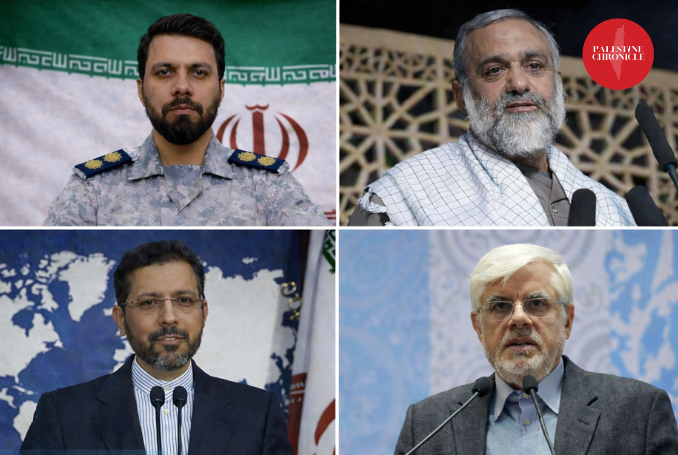
Iranian Vice President Mohammad Reza Aref said that Tehran maintains full control over the Strait of Hormuz, stressing that Iran will obtain its rights either “at the negotiating table or on the battlefield.”
He also dismissed Trump’s recent statements, describing them as “lies and illusions that do not deserve a response.”
‘Seven Lies’
This position was reinforced by Iranian Parliament Speaker Mohammad Bagher Ghalibaf, who said Trump had made “seven claims in one hour, all of which are false,” adding that “with these lies, they did not win the war, and they certainly will not achieve results in negotiations.”
Military officials also linked Iran’s control of the strait directly to US actions.
Brigadier General Ebrahim Zolfaghari, spokesperson for Iran’s Khatam al-Anbiya Central Headquarters, said that “the Americans are still practicing piracy and maritime theft under what is called a blockade,” adding that “control of the Strait of Hormuz has returned to its previous state… under strict management and control of the armed forces.”
He added that the strait would remain under tight control “as long as the United States does not lift restrictions on the movement of Iranian vessels.”
These statements come as Iran confirmed that the strait had been closed again on April 18, following a brief reopening during the Lebanon ceasefire.
Tehran had previously indicated that continued US enforcement of a naval blockade would lead to renewed restrictions on maritime traffic.
Negotiations and Conditions
Iran’s Supreme National Security Council said that new US proposals have been presented and are currently under review, but no response has yet been issued.
According to the council, negotiations held in Islamabad with Pakistani mediation lasted 21 hours but ended without a defined outcome after the US introduced new demands described as “arrogant.”
The statement noted that Iran had agreed to enter talks after Trump publicly accepted a proposed 10-point Iranian framework. However, officials said the US later deviated from that framework during discussions.
Tehran emphasized that it would not abandon its positions, citing both “the strength of fighters on the battlefield” and “the awareness of the Iranian people.”
Iran also stated that any reopening of the Strait of Hormuz would be conditional and temporary, applying only to commercial vessels and requiring full compliance with ceasefire terms across all fronts, including Lebanon.
No Timeline for Talks
Iranian Deputy Foreign Minister Saeed Khatibzadeh said that no date has been set for the next round of negotiations with the United States, stressing that agreement on a framework must be reached first.
“We do not want to enter negotiations or meetings that are doomed to fail and could serve as a pretext for further escalation,” he said during remarks at a diplomatic forum in Antalya.
He added that Iran would not accept being treated as an exception to international law and confirmed that any commitments would remain within established international frameworks.
Khatibzadeh also linked Iran’s latest actions in Hormuz to US conduct, saying Washington had undermined the ceasefire by attempting to impose conditions that excluded Iran from maritime access.
Warnings of Escalation
Senior Iranian military officials warned that the conflict could expand if current conditions persist.
Brigadier General Mohammad Reza Naqdi, adviser to the commander of the Islamic Revolutionary Guard Corps (IRGC), said the war could take on a global dimension if it continues, warning that any renewed hostilities would be met with missile and drone attacks.
Naqdi also questioned claims that Iran’s naval capabilities had been destroyed, asking, “If they had eliminated them, why can’t they open the Strait of Hormuz?”
He added that Iran possesses “important and winning cards” that have not yet been used.
Separately, Iran’s naval command warned that any US violation of commitments would be met with a “proportional response,” stressing that the current status of the strait will remain unchanged as long as Iranian shipping remains under threat.
Hormuz Closed Again: Iran Dismantles Trump’s ‘Victory’ Narrative in Real Time
(Iranian Media, Al Mayadeen, PC)


Be the first to comment