

Iranian media report synagogue destruction as coordinated US-Israeli strikes hit Tehran, infrastructure, and multiple regions, causing casualties.
Key Developments
- Iranian media report a historic synagogue in central Tehran was “completely destroyed” in US-Israeli strikes.
- Coordinated attacks hit multiple areas of Tehran alongside infrastructure targets, including bridges, railways, and Kharg Island.
- Casualties were reported across several areas, with deaths confirmed in Pardis, Shahriar, and Kashan.
Synagogue Strike
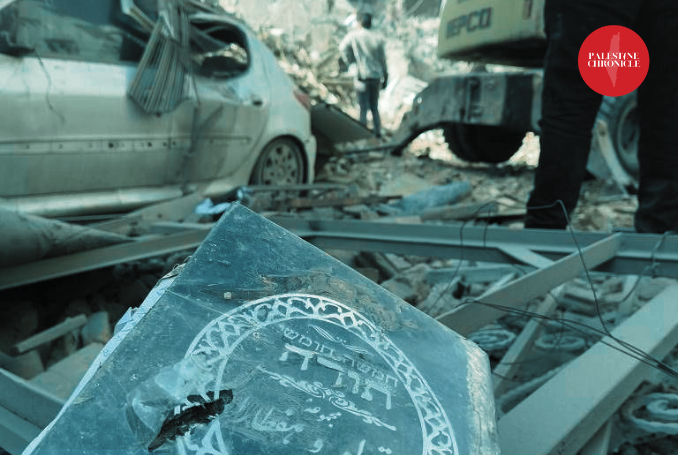
Iranian media reported on Tuesday that a synagogue in central Tehran was completely destroyed during a wave of US-Israeli strikes targeting the capital.
According to Iran’s semi-official Mehr News Agency and the Shargh newspaper, “the Rafi-Nia Synagogue… was completely destroyed in this morning’s attacks.”
Mehr reported that the synagogue was damaged after a nearby residential building was targeted, causing extensive destruction to surrounding structures.
According to regional and Arabic media reports, the synagogue is located near Palestine Street, one of Tehran’s central and historically significant thoroughfares.
The street hosts institutions linked to the Palestinian cause, as well as the former Israeli embassy building, later repurposed as a headquarters for the Palestine Liberation Organization, Quds News reported.
Footage circulated by Iranian outlets showed civil defense teams working amid heavy rubble, while religious materials, including Hebrew-language texts, were seen scattered inside the damaged synagogue.
📹 Israeli-American strike destroys Rafi'nia synagogue in Tehran pic.twitter.com/tOPAHYSb7a
— Mehr News Agency (@MehrnewsCom) April 7, 2026
Coordinated Strikes
The attack on the synagogue occurred as part of a series of coordinated strikes across Tehran.
Explosions were reported in multiple areas, including the north, northeast, and southwest of the capital, as simultaneous strikes targeted several locations.
Among the sites hit was a four-story residential building in southwest Tehran, where Iranian Red Crescent teams were deployed to carry out rescue operations amid extensive destruction. Injuries were reported among civilians at the site.
The scale and distribution of the strikes suggested a broad operation affecting multiple parts of the city within a short timeframe.
Iranian media reported casualties in several areas affected by the strikes.
Mehr reported that more than six bodies were recovered from under the rubble of buildings targeted in the city of Pardis, east of Tehran.
Local officials also confirmed that nine people were killed in an Israeli airstrike on a residential neighborhood in Shahriar, west of Tehran province.
These incidents formed part of a wider pattern of strikes impacting both urban and residential areas.
The US-Israel have just bombed and destroyed a synagogue in Tehran.
Iran is home to West Asia's second largest Jewish community. pic.twitter.com/lle05lFQ3k
— Narjes Rahmati 🟩☫🟥 نرجس رحمتی (@Narjes_Rahmati) April 7, 2026
Strikes on Infrastructure
Beyond the capital, Iranian media reported that US-Israeli strikes extended to key infrastructure and economic targets.
Large explosions were reported on Kharg Island, a strategic oil export hub.
Additional strikes targeted bridges and railway lines, including a railway bridge in Kashan, where officials reported that two people were killed in an attack on the site.
Attacks were also reported along the border between Iran and Iraq, particularly in the Abadan region, where Iranian positions were reportedly struck.
Tehran Synagogue razed – Rafi-Nia Jewish Synagogue completely destroyed in alleged airstrike
'Considering that this synagogue is one of the very old synagogues, it not only has religious value, but also have historical value for the Jewish community of Iran and the great Iranian… pic.twitter.com/dlluBLXkdD
— Viory Video (@vioryvideo) April 7, 2026
Ancient Community
The targeted synagogue was described as one of the key religious gathering sites for members of Iran’s Jewish community, particularly those with ties to the Khorasan region.
The Jewish presence in Iran is among the oldest continuous in the world, dating back more than two millennia. Today, the community is estimated at between 10,000 and 15,000 people, primarily concentrated in Tehran, with smaller populations in cities such as Shiraz and Isfahan.
Judaism is officially recognized in Iran, with the community represented in parliament and maintaining religious practices across approximately 15 to 20 synagogues nationwide, as well as schools and cultural institutions.
Initial reports indicated that religious contents inside the synagogue, including Torah scrolls and Hebrew texts, were damaged or left buried under rubble following the strike.
Iranian Jewish leaders have repeatedly emphasized that their identity is rooted in Iran, distinguishing between Judaism as a religion and Zionism as a political ideology.
FACT SHEET: Who Are the Jews of Iran, and How Do They View the War?
(Mehr, Shargh, Fars, QNN, PC)

Be the first to comment