
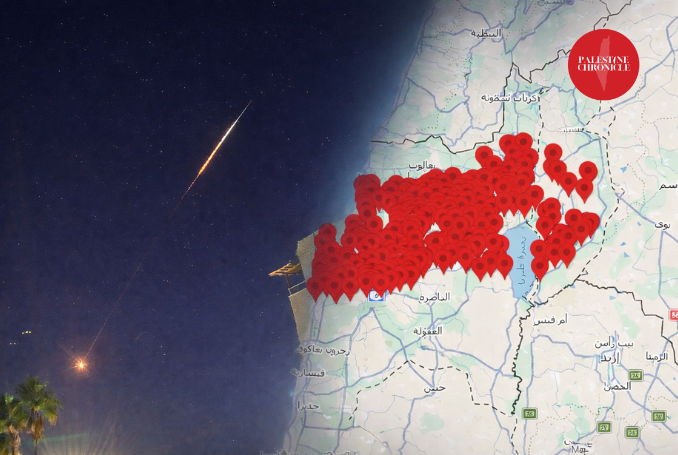
Iran has managed to regain the initiative and the upper hand in most arenas, shifting from a defensive posture to an offensive phase, while placing its adversaries in a narrow position with limited options.
The impact and effectiveness of the Israeli-American strike that targeted the Islamic Republic of Iran on the morning of the 28th of last month cannot be underestimated, nor can the magnitude of the heavy losses suffered by Iran on that bloody morning be denied or concealed. Among the most significant of these losses was the assassination of the leader of the revolution and its guide, who had steered the course of the Iranian state and its people for more than four and a half decades.
It is widely believed—perhaps even asserted—that the primary objective of the aggressive war on Iran is the overthrow of the Islamic regime, the seizure of complete control over the reins of power, and the transformation of this powerful republic into a subordinate system aligned with American and Israeli interests. Such an outcome would mirror the situation in much of the region, where many regimes have shown clear alignment with the American-Israeli camp during the ongoing war, even serving as a buffer zone to protect Israel. Over the past two years, Israel—alongside both the current and previous US administrations—has succeeded in building a regional alignment designed to defend it against attacks coming particularly from the east, including those originating in Yemen and Lebanon.
Beyond the objective of toppling the Islamic system in Iran—which since the success of the revolution has remained one of the most consistent adversaries of Israel and the United States and a key supporter of resistance movements in the region—another goal of the war appears to be economic and geopolitical. Under the presidency of Donald Trump, Washington has shown a clear interest in gaining control over Iranian resources, including oil and gas, in a manner similar to policies pursued in other parts of the world. At the same time, the war is seen by many analysts as part of an attempt to redraw the geopolitical map of the region, with Israel positioned as the dominant regional power.
At the outset of the conflict, the campaign against Iran appeared to have been prepared for years at the intelligence and operational levels. It represented a continuation of earlier escalations, including the aggression of June last year and a series of assassinations and sabotage operations that have persisted since the Islamic Revolution.
In those early moments, the Islamic Republic appeared isolated, facing enormous pressure with limited visible allies. The country was already grappling with multiple internal challenges, including economic difficulties caused by long-standing sanctions, as well as internal protests that in some cases escalated into acts of sabotage. Iran’s adversaries appeared to view these internal tensions as an opportunity to destabilize the state.
Despite these circumstances, the Iranian state activated contingency plans that had been prepared in advance. These plans relied on significant tactical flexibility, allowing institutions to continue functioning even under extreme conditions—including the loss of senior political and military leadership and the targeting of key government centers responsible for maintaining stability.
Through these measures, Iran managed not only to stabilize its internal situation but also to gradually regain the initiative. The conflict shifted from a defensive phase to a more assertive posture, placing its adversaries in a position where their strategic options appeared increasingly constrained.
Politically, the United States initially succeeded in rallying many countries behind a hardline position toward Iran. This campaign relied on familiar narratives concerning the Iranian nuclear program, the ballistic missile program, and allegations of repression against protesters. These arguments helped Washington secure diplomatic backing from several allies, as well as from regional states that allowed their territories to be used for military operations.
However, as the war progressed, the political balance began to shift. Iran sought to expose what it viewed as the broader strategic objectives of the American-Israeli campaign, prompting some countries to reassess their positions. States such as China, Russia, Turkey, and India began to adopt more cautious stances, while several regional actors expressed concern that the war could eventually threaten their own interests and sovereignty.
Militarily, Iran faced a significant imbalance in capabilities. The coalition opposing it possessed overwhelming advantages in air power, naval assets, and intelligence systems supported by advanced technological and satellite capabilities.
Nevertheless, Iran relied on its domestically developed military capabilities and asymmetric strategies to sustain the confrontation. Despite the scale of the initial losses and the shock of the early attacks, Iranian forces managed to reorganize and mount a series of responses that surprised both adversaries and observers. Many had initially believed that the state might collapse within days, particularly after the targeting of key leadership figures.
Instead, Iran expanded the scope of its military responses, targeting American bases across the region as well as Israeli military and intelligence facilities. Some operations reportedly focused on networks believed to be linked to intelligence activities in several countries. In addition, Iranian actions at sea forced US naval forces to reposition farther from Iranian shores.
Economically, Iran continued to operate despite decades of sanctions and the disruptions caused by the war. Although several attacks targeted infrastructure, including ports and industrial facilities, the Iranian economy demonstrated resilience. Oil production and exports continued, allowing the country to maintain critical revenue streams.
At the same time, Iran sought to increase the economic costs of the conflict for its adversaries. Its geographic position near the Strait of Hormuz—a vital passageway for global energy supplies—remained a significant source of strategic leverage during the confrontation.
Domestically, the government also worked to maintain stability. According to various reports, Iranian authorities managed to secure supplies of essential goods, including food and medicine, preventing the shortages that many observers had predicted. This contributed to reinforcing public confidence in the government’s ability to manage the crisis.
The media front also experienced a noticeable shift. Iranian officials sought to present their narrative of the conflict through international media and social networks, while criticism of American and Israeli messaging intensified across many global platforms. As the war continued, competing narratives about the conflict became a central component of the broader confrontation.
Internally, the government also succeeded in containing the protests that had been viewed by its adversaries as a potential catalyst for regime change. Demonstrations that had previously reflected internal dissatisfaction were increasingly counterbalanced by public rallies supporting the state’s position in the conflict.
The regaining of the initiative was not limited to Iran alone. Other forces aligned with the so-called axis of resistance also re-entered the confrontation. In Lebanon and Iraq, movements that had appeared relatively quiet following earlier losses began to resume operations. Hezbollah in particular re-engaged militarily, challenging earlier Israeli claims that it had suffered irreversible setbacks.
These developments altered the broader strategic picture of the war. The narrative that had previously suggested the weakening of the axis of resistance was increasingly questioned as the conflict evolved.
More than two weeks after the launch of Iran’s True Promise 4 operation, and with additional operations unfolding across the region, the situation remains highly volatile. The next stage of the conflict appears likely to be even more complex, with the potential for significant geopolitical repercussions.
What remains clear, however, is that the confrontation has entered a new phase. The calculations of the forces confronting Iran have not fully aligned with the expectations of those who believed that the axis of resistance would quickly collapse under pressure.
Instead, the ongoing war has demonstrated that these forces represent a structured network capable of absorbing shocks and continuing to operate under extremely difficult conditions—suggesting that the broader struggle in the region is far from reaching its final outcome.
(This article was originally published in Al Mayadeen. It was translated and edited by the Palestine Chronicle)


Be the first to comment