
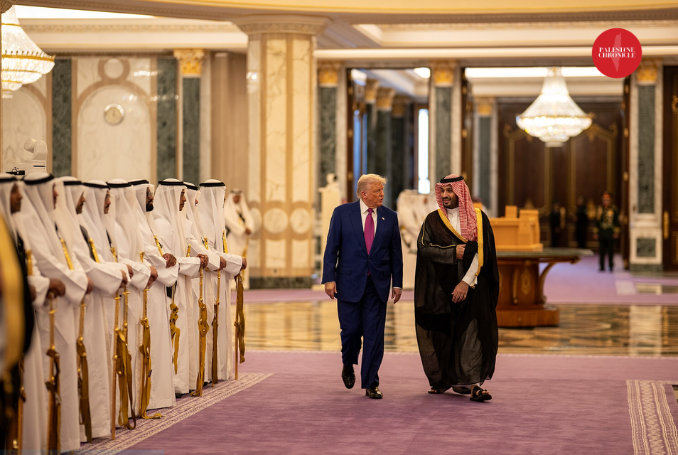

Crown Prince Mohammed bin Salman twice urged Trump to strike Ansarallah as Yemeni forces advanced toward Bab al-Mandab, Axios reported.
Key Takeaways
- Saudi Crown Prince Mohammed bin Salman reportedly called President Donald Trump twice Thursday, urging direct US strikes against Ansarallah forces in Yemen.
- Trump declined, while Washington agreed to provide Saudi Arabia with intelligence and targeting data as fighting intensified near the Red Sea coast.
- The Ansarallah advance toward Mokha and Bab al-Mandab has raised concerns in Riyadh and Washington over one of the world’s most important maritime chokepoints.
MBS Calls Trump Twice
Saudi Crown Prince Mohammed bin Salman called US President Donald Trump twice on Thursday, urging Washington to launch direct military strikes against Ansarallah as Saudi-backed forces lost ground in western Yemen, Axios reported on Friday.
Axios reported the conversations, citing two US officials familiar with the matter. According to the report, the crown prince first called Trump as forces of the Yemeni Armed Forces, affiliated with the Ansarallah movement, advanced toward the strategic coastal city of Mokha and Saudi-backed Yemeni forces retreated.
Several hours later, bin Salman called Trump again and urged him to authorize US strikes against Ansarallah. Trump reportedly declined the request.
US officials told Axios that the administration currently has no plans to directly enter the fighting against Ansarallah, despite growing concern in Washington over developments along Yemen’s Red Sea coast.
Reuters news agency separately reported on the Axios account but said it could not independently verify the conversations.
Ansarallah’s Advance on Al-Mokha, Bab al-Mandeb: All You Need to Know
Advance toward Bab al-Mandab
The Saudi request came as Ansarallah forces pushed closer to Bab al-Mandab, the narrow waterway connecting the Red Sea with the Gulf of Aden.
The strait is one of the world’s most important maritime corridors, carrying international trade and energy shipments between the Indian Ocean, the Red Sea and the Suez Canal.
The latest advance has therefore significantly raised the strategic stakes of the fighting in Yemen.
Saudi Arabia depends heavily on Red Sea shipping routes for oil exports, while Washington has repeatedly identified freedom of navigation through the region as a core security interest.
The situation has become particularly sensitive because Iran has simultaneously challenged shipping through the Strait of Hormuz.
Axios said that Ansarallah control over Bab al-Mandab could provide Tehran and its regional allies with an additional source of leverage over Washington and Gulf states.
View this post on Instagram
Trump Rejects New US Front
US officials have reportedly told Saudi counterparts in recent weeks that Trump wants American forces concentrated on Iran and the Strait of Hormuz rather than opening another direct military front in Yemen.
A senior Trump administration official told Axios that Washington intended to support its regional partners without assuming direct control of the fighting.
“The United States is focused on protecting our core national security interests — such as ensuring freedom of navigation in the Red Sea — while empowering our regional partners to take the lead in managing and resolving regional security challenges,” the official said.
“We are in continuous dialogue with Saudi Arabia and the Republic of Yemen Government regarding regional stability,” he added, according to the report.
Despite Trump’s refusal to authorize strikes, a US official said Washington would provide Saudi Arabia with intelligence on Ansarallah forces and targeting information.
Approximately 200 US military personnel are already deployed in Saudi Arabia providing what Axios described as non-kinetic support.
CENTCOM Commander Travels to Saudi Arabia
Adm. Brad Cooper, commander of US Central Command, traveled to Saudi Arabia on Thursday for urgent coordination meetings as the situation deteriorated, according to two sources cited by Axios.
The visit underscores growing US concern about the military balance in Yemen even as the Trump administration seeks to avoid entering the war directly.
Neither the White House nor the Saudi Embassy in Washington commented on the Axios report.
Ansarallah Forces Seize Al-Mokha, Advance toward Strategic Bab al-Mandeb Strait
The latest Saudi request represents a significant shift from Riyadh’s position only two months earlier.
In July, Saudi officials reportedly told Washington that the kingdom was capable of confronting Ansarallah without direct US military assistance.
Saudi Position Shifts
The current round of fighting began in July after Saudi Arabia prevented an Iranian aircraft carrying senior Ansarallah officials from returning to Sanaa following the funeral of former Iranian Supreme Leader Ali Khamenei.
According to Axios, bin Salman sought Trump’s political support at the time for a Saudi strike on Sanaa International Airport, while stressing that Riyadh did not require US military assistance.
Trump reportedly gave his political backing.
Ansarallah subsequently retaliated by attacking Saudi tankers in the Red Sea and later expanded its operations against Saudi energy infrastructure.
Saudi Arabia and allied Yemeni forces answered with airstrikes and ground operations against Ansarallah positions.
As the confrontation intensified, however, Riyadh gradually sought greater levels of US assistance.
Reuters reported in July that Saudi Arabia was also seeking to assemble an international coalition to protect Red Sea shipping from Ansarallah attacks.
A Stranglehold on Global Economy: How Iran has Benefited from a Lower-Intensity War
Red Sea Balance under Pressure
The latest battlefield developments could have consequences extending far beyond Yemen.
Mokha lies on Yemen’s western coast, north of Bab al-Mandab, and further Ansarallah gains in the area could increase the movement’s ability to pressure maritime traffic approaching the strait.
The development comes as Washington is already heavily committed militarily against Iran and is seeking to protect shipping through the Strait of Hormuz.
A simultaneous challenge at Bab al-Mandab would place additional pressure on US military resources and Gulf energy routes.
For now, Trump has rejected Riyadh’s request for direct strikes, leaving Saudi Arabia and its Yemeni allies to confront Ansarallah while receiving increased intelligence and logistical support from Washington.
(PC, Axios, Reuters)




Saudi royals starve Yemen and bomb them, and then they want Americans to bail them out? Just stop doing it! (and where is their ‘Juan Guaido’ anyway? is it still Hadi?) How about this: pay every adult US citizen $5M, and we’ll pretend to care. FREE PALESTINE
Saudi Arabia: behold, the Paper Tiger, that will not lift its little finger for you. For “Israel”? Everything, anything, even to let you die. Why are you spending US$ on US weapons and bases? Diplomacy between you and Yemen: this is the way to secure your throne. Not with US, “Israel”, EU/NATO, perfidious Albion.