
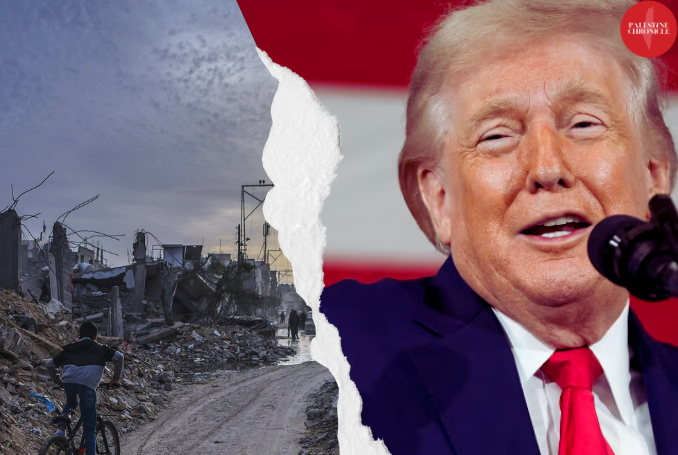

At his 2026 State of the Union address, Trump claimed Middle East breakthroughs in Gaza and Iran, but key assertions face serious factual and strategic scrutiny.
Key Takeaways
- Trump claimed the Gaza war is nearly over and said that all captives have been returned.
- He claimed the US “obliterated” Iran’s nuclear program in a direct strike.
- Intelligence assessments contradict the claim of total destruction.
- The speech reinforces a unilateral “peace through strength” doctrine.
‘Like Never Before’
US President Donald J. Trump used the Middle East portion of his 2026 State of the Union address on Tuesday to project decisive American power and diplomatic dominance.
“Our country has never been stronger,” he declared, insisting that the United States is now “respected again, perhaps, like never before.” In his telling, wars are being wound down, hostages returned, and adversaries subdued under his leadership.
In a sweeping list of global conflicts, he claimed to have ended in his first ten months, Trump included “Israel and Iran” and “the war in Gaza,” suggesting that US intervention had reshaped the regional landscape.
Central to that narrative was the Middle East. Trump described Israel’s war on Gaza as diminished in intensity and nearing closure. He emphasized the return of Israeli captives, both living and dead, presenting the ceasefire as a humanitarian and diplomatic achievement.
In today’s state of the union address, Trump gave away the reasons for not attacking Iran. In the video below, he says Iran has missiles that can reach Europe, US bases worldwide and soon, US itself.
War is not just about exploding bombs.
From Jan to Feb, we have seen a… pic.twitter.com/I1IvV0wJYP
— @Misra_Amaresh (@misra_amaresh) February 25, 2026
The tone, however, shifted sharply when he addressed Iran. Trump recalled the so-called ‘Operation Midnight Hammer’ — a US strike on Iranian soil carried out last June — that he said had “obliterated Iran’s nuclear weapons program.”
Even while referencing ongoing negotiations with Tehran, Trump insisted he had not heard what he called the “secret words”: a clear Iranian renunciation of nuclear weapons. Diplomacy, he suggested, remains possible — but only from a position of force.
‘Just about There’
Trump portrayed Gaza as a war effectively managed and largely contained under his administration.
He told the US Congress:
“The war in Gaza, which proceeds at a very low level, it’s just about there. I want to thank Steve Witkoff and Jared Kushner for your help… Under the ceasefire I negotiated, every single hostage, both living and dead, has been returned home. Can you believe this? Nobody thought it was possible.”
His emotional language focused exclusively on Israeli families: “Those parents who had a dead son — their boy, they always called him their boy — they wanted him as much as though he were living… We got them all back. Nobody thought that was possible, but we did it.”
In Trump’s speech, there was no parallel emotional reference to Palestinian civilian casualties, displacement, or devastating humanitarian loss in Gaza.
‘A Tough Job’
In his remarks, Trump made only one direct reference to Hamas.
He stated: “Believe it or not, Hamas worked along with Israel, and they dug and they dug and they dug. Passing up 100 bodies sometimes for each one they found — a tough job.”
Trump did not elaborate on Hamas politically, militarily, or ideologically in this address.
‘We Wiped It Out’
Iran received the most forceful rhetoric of the address. Trump claimed that “in a breakthrough operation last June, the United States military obliterated Iran’s nuclear weapons program with an attack on Iranian soil known as Operation Midnight Hammer. For decades, it had been the policy of the United States never to allow Iran to obtain a nuclear weapon.”
🇺🇸📢 ‘You’ve #killed Americans!’: #Omar yells as #Trump references Somali community |🗽🎙️#StateOfTheUnion Address 📺📰 »» https://t.co/QP3ufhrZJF pic.twitter.com/9z7MNhrKyD
— Economic Times (@EconomicTimes) February 25, 2026
He continued:
“We wiped it out, and they want to start over again, and are at this moment again pursuing their sinister ambitions… They’ve already developed missiles that can threaten Europe and our bases overseas, and they’re working to build missiles that will soon reach the United States of America.”
Even while acknowledging negotiations, he warned:
“My preference is to solve this problem through diplomacy. But one thing is certain — I will never allow the world’s No. 1 sponsor of terror… to have a nuclear weapon. Can’t let that happen.”
Despite the threats, Trump grouped “Israel and Iran” among conflicts he claimed to have ended, without elaborating on mechanisms or agreements.
“My first 10 months, I ended eight wars, including Cambodia — isn’t it funny? Sick people — Cambodia and Thailand. Pakistan and India — it would have been a nuclear war. 35 million people said the prime minister of Pakistan would have died if it were not for my involvement. Kosovo and Serbia, Israel and Iran, Egypt and Ethiopia, Armenia and Azerbaijan, the Congo and Rwanda, and, of course, the war in Gaza…”
Fact-Check: Assessing Trump’s Key Claims
-
Did the US “obliterate” Iran’s nuclear program?
According to a detailed intelligence assessment reported by the Washington Post last July, the answer is no.
US strikes reportedly caused significant damage to parts of Iran’s nuclear infrastructure, particularly at the Fordow facility. However, intelligence officials indicated that other major sites — including Natanz and Isfahan — were not conclusively destroyed. Analysts suggested the program was likely set back months, possibly up to two years, but not eliminated.
The assessment makes clear that key centrifuges and technical capacity may have survived or been relocated. The term “obliterated” does not align with available intelligence conclusions.
-
Is Gaza “just about there”?
While captive returns have been confirmed and ceasefire arrangements implemented, Israel has continued to violate the terms of the agreement.
The Gaza Health Ministry estimates that over 600 people have been killed since the declaration of the ceasefire on October 10.
Meanwhile, humanitarian conditions in Gaza remain acute and deeply constrained.
Humanitarian aid deliveries have been severely restricted by Israeli occupation authorities, with only a fraction of agreed daily convoys entering the enclave and large stocks of food, medical supplies, tents, and basic necessities waiting on the Egyptian side of the Rafah crossing because Israel continues to limit access.
Israel has also kept the Rafah crossing — the principal exit point to Egypt — largely closed or under strict control, severely restricting the movement of people and supplies in and out of Gaza, contributing to shortages of life-saving support and constraining civilian evacuation.”
Heavy Rains Flood Gaza Camps, Collapse Tents and Force Families into Streets
-
Are negotiations with Iran ongoing?
Diplomatic contacts between Washington and Tehran continue.
Iran has repeatedly stated it is willing to engage in talks over its nuclear program — including offers to dilute enriched uranium and expand monitoring — but it has also consistently rejected demands to halt enrichment entirely or abandon sovereign rights recognized under global treaties.
Tehran has insisted it will not bow to pressure and will protect what it considers its sovereign rights, even as it participates in talks aimed at avoiding open conflict.
In this context, Trump’s invocation of “secret words” functions more as political framing meant to signal toughness to domestic audiences than as a reflection of a clear diplomatic milestone in the negotiations themselves.
Our Strategic Assessment
President Trump’s Middle East messaging reflects more than rhetorical bravado; it aligns with a deeper regional logic that Ramzy Baroud has argued is central to current geopolitics. In his analysis of Israel’s drive to confront and potentially destroy Iran, Baroud contends that the issue “is not about centrifuges or uranium enrichment alone,” but about a wider political project centered on Palestine.
Baroud argues that weakening Iran is strategically tied to reshaping the balance of power around Israel and undermining the broader axis of resistance that supports Palestinian political and military capacity. In his words, “the confrontation with Iran cannot be separated from the Palestinian question.” In this view, Iran is not merely a nuclear file; it is a geopolitical pillar in a regional structure that challenges Israeli military supremacy. Confronting Tehran, therefore, becomes inseparable from managing — or suppressing — the Palestinian question.
The Board of Peace Explained: How Gaza Became the Blueprint for a New US Order
Trump’s speech reflects this architecture. The emotional center of his Gaza remarks focused exclusively on Israeli captives and Israeli families.
Similarly, the claim that the United States “obliterated” Iran’s nuclear program serves a political objective beyond technical accuracy. Baroud’s analysis suggests that such framing aligns with a broader objective: “reshaping the region in a way that secures Israeli dominance while marginalizing Palestinian agency.”
In this framework, “peace” is not defined as a mutual political settlement but as the consolidation of power. Military action establishes leverage. Diplomacy follows under pressure.
Baroud’s central warning is that efforts to destroy or neutralize Iran are ultimately about shaping the Palestinian future without Palestinian agency.
(The Palestine Chronicle)


Dondolf is a piece of sh!t.
The Israeli Jewish Nazis own him.
Trump asked “Can you believe it?” Well, no I can’t. I keep hoping he’ll say something more believable, like giving us the details of how he ended the border disputes between Alaska and Florida, and California and New Hampshire, and how he stopped the border raids between Hawaii and Puerto Rico … and how he stopped Uganda from starting an air, sea and land invasion of Bolivia and Outer Mongolia … inherently believable stuff like that – though mostly believable in the sense that he’d’ve finally admitted he had completely and utterly lost it. (International relations get really troubling when landlocked states plan sea invasions of other landlocked states – ask Idi Amin!)