
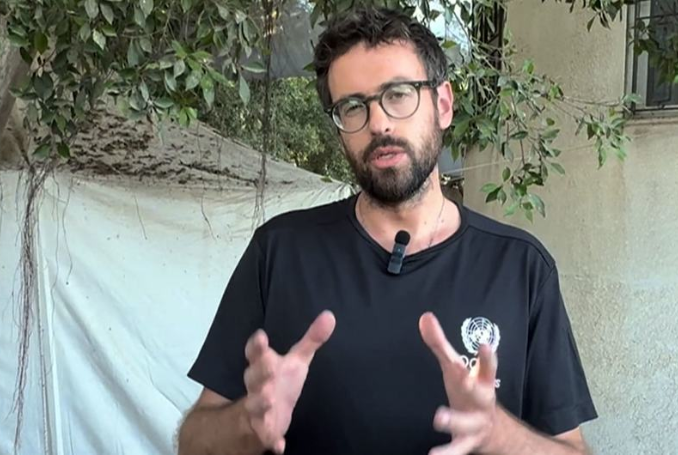

Just over a week ago, Israeli authorities refused to renew Witthall’s visa, following his outspoken condemnation of Israel’s actions.
Senior UN humanitarian official, Jonathan Witthall, said he has witnessed “first hand” what appears to be the “systematic dismantling of the means to sustain Palestinian life” in Gaza over the past 22 months.
“Gaza has been held under water for 22 months, allowed to gasp for air only when Israeli authorities have succumbed to political pressure from those with more leverage than international law itself,” Withall wrote in an op-ed published in the Guardian on Sunday. “After months of relentless bombardment, forced displacement and deprivation, the impact of Israel’s collective punishment of Gaza’s people has never been more devastating.”
Everyone should read this. Jonathan Whittall, head of OCHA, who after speaking out was denied his visa by Israel describes what he’s seen in Gaza and the methods Israel is using to block and hinder aid.
It is devastating.https://t.co/zLvlQhP0QE
— Kathleen van Voorhees (@k_vanvoorhees) August 4, 2025
Just over a week ago, Israeli authorities refused to renew Witthall’s visa, following his outspoken condemnation of Israel’s actions against starving civilians in the besieged enclave.
Whittall, who resides in Jerusalem and frequently visits Gaza, is the head of the UN Office for the Coordination of Humanitarian Affairs (OCHA) in the occupied Palestinian territory. He has repeatedly denounced the catastrophic humanitarian conditions in Gaza, describing Israel’s conduct as a deliberate attempt “at wiping out Palestinian life from Gaza.”
He wrote that more than a year after the International Court of Justice (ICJ) ordered Israel “take all measures within its power” to prevent acts of genocide, “and despite all our warnings – we are still witnessing starvation, insufficient access to water, a sanitation crisis and a crumbling health system against a backdrop of ongoing violence that is resulting in scores of Palestinians being killed daily, including children.”
Deliberate ‘Silencing’
Witthall said humanitarians have been forced to use their voices to describe the “appalling, inhumane conditions” in Gaza. But that doing so, “comes at a price.”
“After I held a press briefing in Gaza on 22 June in which I described how starving civilians were being shot while trying to reach food – what I called “conditions created to kill” – the Israeli minister of foreign affairs announced in a post on X that my visa would not been renewed,” he noted.
Israel Expels UN Humanitarian Chief for Condemning Gaza Starvation
This was followed up with an announcement by the Israeli permanent representative to the UN at a Security Council that he would be expected to leave by July 29.
“This silencing is part of a broader pattern,” he stated, adding that international NGOs face “increasingly restrictive registration requirements, including clauses that prohibit certain criticism of Israel.”
Targeted Legislation
Witthall noted that Palestinian NGOs, which continue to save lives daily against all odds, are cut off from the resources they need to operate.
‘Evidence of Genocide’: Israel Kills 56 in One Day, Total Death Toll Nears 61,000
At the same time, UN agencies are increasingly being issued only six, three or one-month visas based on whether they are considered “good, bad or ugly”.
The United Nations Relief and Works Agency for Palestine Refugees in the Near East (Unwra) “has been targeted through legislation, its international staff barred from entry and its operations slowly suffocated.”
Malnutrition and Death
Witthall stressed that Gaza is “being fragmented” with 2.1 million people “being crammed” into just 12 percent of the land area of the Strip.
Witthall wrote about carrying patients “out of dark, cat-infested ICU wards in destroyed hospitals overtaken by Israeli forces where the dead were being buried in the courtyard by the last remaining sleep-deprived staff who had witnessed their colleagues being marched away.”
No one should be forced to risk their life to eat.
Every day, @UN teams collect critical supplies from Gaza’s crossings, bringing them to those struggling to survive.
But movement is often delayed, and desperate crowds who gather to offload, are met with gunfire.#Gaza today⬇️ pic.twitter.com/ag8NcwZlm1
— UN Humanitarian (@UNOCHA) July 30, 2025
He chillingly described medics “in their uniforms killed and buried under ambulances crushed by Israeli forces…Countless bodies in the streets being eaten by dogs. People calling from beneath rubble, with help from first responders denied until no one was left breathing.”
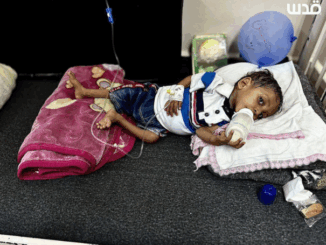
The UN official emphasized that children are “wasting away from malnutrition while aid navigates an insurmountable obstacle course of obstructionism.”
The Milk that Never Came: How Famine in Gaza Shatters the First Bond and the Soul of a Nation
He denied “being the problem” as accused by Israel, stating “They say we are failing to collect goods from the crossings. We aren’t failing, we are being obstructed.”
Aid Seekers Shot
Just last week, Witthall said, he was part of a convoy headed to the Kerem Shalom crossing from inside Gaza where Palestinians awaiting aid were shot and killed by Israeli forces.
He mentioned “an unnecessarily complicated route provided by Israeli forces” and that when the trucks “were lined up at a holding point and the green light to move to the crossing finally came from Israeli forces, thousands of desperate people moved with us, hoping the trucks would return with food.”
“I was there… and I saw soldiers shooting at the starving.”
Jonathan Whittall, Head of the UN Office for the Coordination of Humanitarian Affairs in Palestine, breaks the silence.
He witnessed Israeli soldiers open fire on hungry Palestinians trying to reach aid trucks.
This… pic.twitter.com/OwNZDxtXY5— Quds News Network (@QudsNen) August 3, 2025
“As we crawled forward, people clung to the vehicles until we saw the first dead body on the side of the road, shot in the back from the direction of Israeli forces. At the crossing, the gate was shut. We waited around two hours for a soldier to open it,” he added.
Witthall said what is happening in Gaza and the occupied West bank “is not complicated.”
“It is not inevitable. It is the result of deliberate political choices by those who create these conditions and those who enable them. The end of the occupation is long overdue,” he wrote.
Witthall added that, “The credibility of the multilateral system is being weakened by double standards and impunity. International law cannot be a tool of convenience for some if it is to be a viable tool of protection for all.”
Over 60,000 Killed
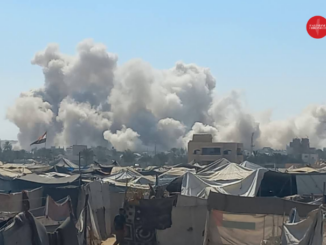
Since Israel’s reneging on the ceasefire on March 18, it has killed and wounded thousands of Palestinians throughout the Gaza Strip through a bloody and ongoing aerial bombardment.
On October 7, 2023, following a Palestinian Resistance operation in southern Israel, the Israeli military launched a genocidal war against the Palestinians, killing over 60,000, wounding more than 147,000, with over 14,000 still missing.
The Israeli army continued its attacks on famine-stricken Palestinians in the Gaza Strip on Monday, killing at least 56 people since dawn, including 17 aid-seekers, in a series of airstrikes and ground bombardments, according to medical sources.
Meanwhile, with 18,000 children… pic.twitter.com/4G7auyJBoQ
— The Palestine Chronicle (@PalestineChron) August 4, 2025
Despite habitual condemnation by many countries around the world of the Israeli genocide, little has been done to hold Israel accountable.
Israel is currently under investigation for the crime of genocide by the International Court of Justice, while accused war criminals — including Prime Minister Benjamin Netanyahu — are now officially wanted by the International Criminal Court.
The Israeli genocide has been largely defended, supported, and financed by Washington and a few other Western powers.
(The Palestine Chronicle)

“Witthall added that, “The credibility of the multilateral system is being weakened by double standards and impunity. International law cannot be a tool of convenience for some if it is to be a viable tool of protection for all.”” The time to remind them of that will, I suspect, be when Iran ttests its first nuclear bomb.