
China condemns US-Israeli strikes on Iran, backs Tehran’s sovereignty, and urges an immediate halt to military operations.
Key Takeaways
- China says US-Israeli strikes on Iran violate international law and risk expanding the conflict across the region.
- Beijing affirmed its support for Iran’s sovereignty, territorial integrity, and legitimate rights.
- Chinese officials called for an immediate halt to military operations and renewed diplomatic engagement.
- China’s foreign minister and UN diplomats warned that force cannot resolve the crisis.
- The statements reflect Beijing’s broader concern about regional escalation and global energy and security stability.
China Backs Iran’s Sovereignty
China has strongly condemned the US-Israeli military aggression against Iran, warning that the attacks violate international law and threaten to escalate the conflict across the Middle East.
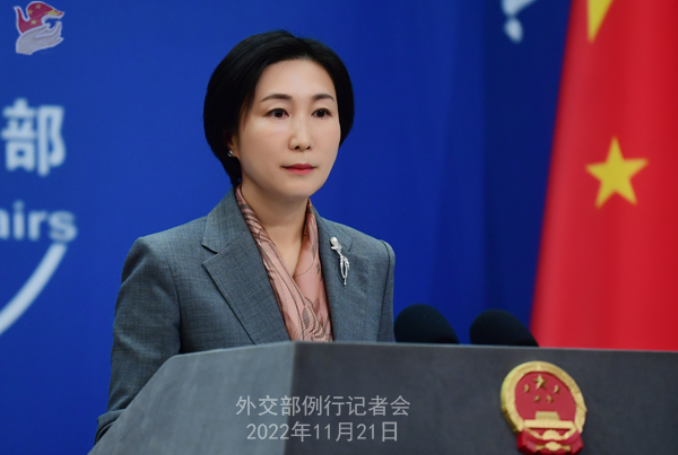
Speaking during a press briefing on Friday, Chinese Foreign Ministry spokesperson Mao Ning said Beijing supports Tehran in defending its sovereignty and rights.
“China opposes the US and Israel launching military strikes against Iran in violation of international law,” Mao said during the briefing, according to the Chinese Foreign Ministry transcript.
She added that Beijing stands behind Iran’s territorial integrity and national dignity.
“We support Iran in safeguarding its sovereignty, security, territorial integrity and national dignity and in upholding its legitimate and lawful rights and interests,” Mao stated.
The Chinese official also warned that the military escalation risks widening the conflict beyond Iran and Israel, stressing that the immediate priority should be stopping hostilities.
‘This Is Not Your War’ – Russia, China, World Respond to US–Israeli War on Iran
“The pressing priority now is to stop military actions immediately, prevent the conflict from spreading and spilling over, and avoid further escalation,” she said.
China reiterated its longstanding position that international disputes must be resolved through diplomacy rather than military force.
“China always advocates resolving issues through political and diplomatic means,” Mao said.
The remarks came as the war entered a new phase, with the United States and Israel continuing aggression on Iranian territory while Iran launched missile attacks targeting Israel and American military interests in the region.
Chinese state media and diplomatic officials have repeatedly emphasized that the strikes were carried out without authorization from the United Nations Security Council, a point Beijing views as a clear violation of international norms.
According to the Anadolu news agency, Mao stressed that military operations without UN authorization undermine international law and threaten regional stability.
Israel And The US Will Lose against Iran: Here’s Why – ANALYSIS
Beijing Calls for Diplomacy
China’s position has been echoed by other senior officials, including Foreign Minister Wang Yi, who has warned that military escalation could destabilize the wider region.
Speaking in diplomatic exchanges reported by Reuters news agency, Wang said that dialogue—not force—must guide international efforts to resolve the crisis.
“Force cannot bring peace; dialogue and negotiation are the only way forward,” Wang said.
He also reaffirmed China’s support for Iran’s sovereignty during discussions with regional counterparts, stressing that the conflict should not be allowed to spiral into a broader regional war.
Chinese diplomats at the United Nations have delivered similar warnings, urging all parties to halt military operations and pursue negotiations.
China’s UN mission has repeatedly stressed that sovereignty and territorial integrity must be respected under international law, and that continued strikes could trigger unpredictable consequences across the Middle East.
(Chinese Foreign Ministry, Reuters, Anadolu Agency, Xinhua)