
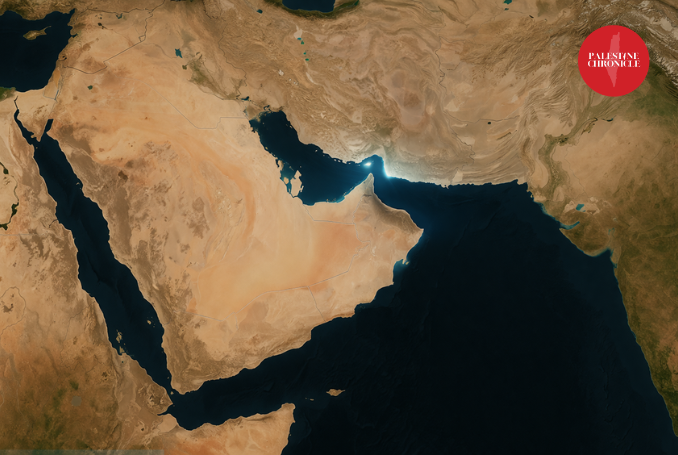

Iran approves Hormuz management plan introducing new security, financial controls and restrictions as regional war reshapes strategic balance.
Key Takeaways
- Iran approves Hormuz management plan, asserting control over key global energy corridor.
- Plan includes restrictions on adversarial states and new financial and security mechanisms.
- Move comes as Tehran links battlefield developments to long-term strategic gains.
Parliament Approves Hormuz Plan
Iran’s parliament has approved a new plan to manage the Strait of Hormuz, introducing a framework that expands Tehran’s role in regulating one of the world’s most critical maritime routes.
According to Iranian agencies Tasnim and Fars, Mojtaba Zarei, a member of the National Security and Foreign Policy Committee, said lawmakers had endorsed a “project to manage the Strait of Hormuz,” outlining a set of measures covering security, navigation, and financial arrangements.
The approval comes as the US-Israeli war on Iran continues to escalate across multiple fronts.
What the Plan Includes
Zarei said the plan includes security arrangements for the strait, maritime navigation safety measures, and environmental provisions, alongside a new financial structure governing transit.
Among the key elements are fees and regulatory systems tied to Iranian currency, as well as measures aimed at organizing shipping activity through Iranian oversight.
The plan also includes restrictions on passage, with Zarei stating that the framework would prevent “Americans and Zionists” from crossing, in addition to countries participating in unilateral sanctions against Iran.
He added that the project reinforces the sovereign role of Iran and its armed forces in managing and securing the strait.
Iran Announces Death of Naval Commander Tangsiri, Warns of ‘Surprises’
Coordination with Oman
Zarei noted that the proposal includes cooperation with Oman in developing a legal framework governing the strait, indicating that Tehran is pursuing a structured arrangement involving the two coastal states.
The Strait of Hormuz lies between Iran and Oman and serves as a primary transit route for global energy shipments.
The parliamentary approval follows remarks by Iranian Vice President Mohammad Reza Aref, who said that the system for managing the Strait of Hormuz “has changed and will not return to what it was.”
Aref added that the government is working to transform recent developments into economic and security gains.
Iranian officials have increasingly linked strategic decisions to ongoing military developments, including continued missile and drone operations against Israeli targets and US-linked sites in the region.
Existing Measures and Signals
Recent Iranian messaging had already pointed toward tighter control over the strait.
In late March, Iranian officials indicated that ships considered “non-hostile” could continue transit, while warning against activities linked to military operations against Iran.
The parliamentary move formalizes these signals into a broader regulatory framework.
The Strait of Hormuz remains one of the world’s most important energy corridors, with a significant share of global oil and gas shipments passing through it.
Any changes to how the Strait is managed carry immediate implications for regional security and global markets.
Iran has repeatedly emphasized its geographic position along the Strait as a strategic factor, particularly during periods of heightened tension.
Qaani: ‘Prepare for a New Regional Order’ as Iran Denies Direct Talks with US
Next Steps Remain Unclear
While the plan outlines a broad framework, details regarding implementation remain limited.
It is not yet clear when specific measures—particularly restrictions on certain states or financial mechanisms—will be enforced.
However, the approval marks a shift from signaling to formal policy, placing the Strait of Hormuz at the center of Iran’s evolving strategy as the war continues.
(Fars, Tasnim, Al Mayadeen, PC)




Be the first to comment