
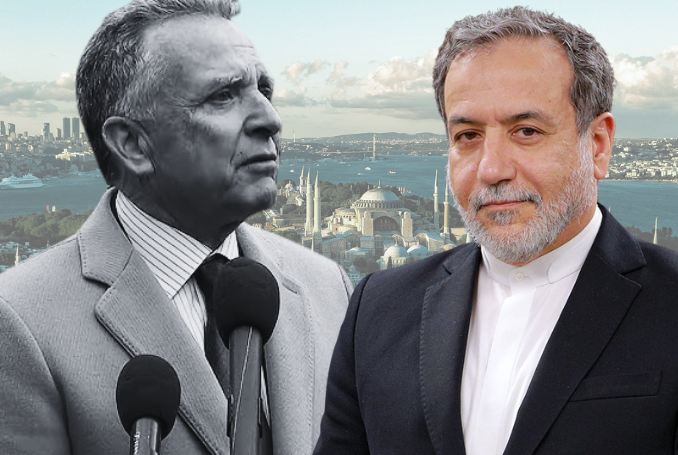

Araghchi said Iran today is no longer vulnerable to external coercion. “In the past the Shah went where they wanted. Today Iran has the capacity to stand firm.”
Key Developments
- Iran rejects “zero enrichment” and insists nuclear rights are non-negotiable.
- Tehran calls recent US talks a “step forward” but warns trust remains low.
- Missile program declared permanently outside negotiations.
- Officials say pressure or military threats will not force retreat.
No Negotiations Without Rights
Iranian Foreign Minister Abbas Araghchi said diplomacy with the United States cannot succeed unless Washington recognizes Tehran’s rights, warning that pressure will only harden Iran’s position.
Speaking at Iran’s national conference on foreign policy and diplomatic history, Araghchi stated, “Talks cannot reach any result unless the other side respects and recognizes the rights of the Iranian people.”
He stressed Iran rejects-imposed conditions, adding, “Iran does not accept dictates, and there is no solution except negotiations.”
The minister framed the current moment as a test of endurance rather than compromise. “Retreating one step means retreating forever, and concessions have no end. The greatest challenge today is the challenge of steadfastness,” he said.
He also rejected the idea that military pressure could force Iran to surrender: “Some think attacking Iran will push it to submission. This cannot happen.”
Drawing a historical comparison, Araghchi said Iran today is no longer vulnerable to external coercion. “In the past the Shah went where they wanted. Today Iran has the capacity to stand firm.”
He added that military deployments in the region would not alter Tehran’s stance: “Bringing naval fleets to the region to impose pressure will not make us feel weak and will not push us to retreat from our positions.”
Diplomacy and War
Araghchi described Iran as prepared for both diplomacy and confrontation, though not seeking conflict. “We are people of diplomacy and people of war — but we do not want war. If they choose diplomacy, we are ready.”
He also criticized what he described as a “peace through force” doctrine, saying it reflects a return to power politics. “The first rule of the jungle is that the strong wins and the weak loses — therefore strength and resistance are essential.”
Satellite Data Points to Swift Iranian Missile Recovery After 12-Day War
Nuclear Program Red Lines
Iran reiterated its refusal to abandon uranium enrichment. Araghchi declared, “No one has the right to demand zero enrichment from us,” stressing that enrichment is a guaranteed national right.
He said Tehran could answer questions and pursue negotiations but would not dismantle its nuclear program. Confidence-building measures are possible, he noted, but “sanctions must be lifted in return.”
He added enriched uranium will remain inside the country and any agreement must be “fair and comprehensive.”
The foreign minister also ruled out expanding talks to include military capabilities: “The missile program has never been and will never be subject to negotiations. It is a defensive matter.”
Muscat Talks and Next Steps
Araghchi confirmed recent discussions in Muscat focused only on the nuclear issue. He said the format — direct or indirect — is secondary to substance: “What matters is content, not the form of negotiations.”
He denied meeting US envoy Steve Witkoff, explaining only greetings were exchanged, and said Iran is reviewing the results before deciding on future rounds. No date has been set for further talks.
He added that sanctions and US military movements raise doubts about Washington’s seriousness, but consultations continue with regional countries as well as Russia and China.
The Toxic Border: How Israel’s Chemical Spraying is Reshaping Life in South Lebanon
President: Talks a “Step Forward”
Iranian President Masoud Pezeshkian described the negotiations as progress, saying dialogue remains Tehran’s strategy for resolving disputes peacefully.
“Dialogue has always been our strategy for achieving peaceful solutions,” he said, adding Iran’s nuclear policy is based on rights guaranteed under the Non-Proliferation Treaty.
He stressed Tehran “responds to respect with respect but does not accept the language of force.”
The talks marked the first engagement since last year’s US-Israeli strikes on Iran, which Araghchi previously described as “a good start” toward rebuilding diplomacy.
Narrow Diplomatic Path
The negotiations unfold amid deep disagreements. Washington continues to seek limits on enrichment and missile capabilities, while Tehran views such demands as surrender.
Iranian officials warn military threats will only reinforce deterrence. Araghchi said Iran does not want regional war but is prepared if attacked, reiterating that pressure will not change its core positions.
For Tehran, the message remains consistent: diplomacy is acceptable, but not at the cost of sovereignty.
As Araghchi summarized, negotiations may continue — but only “with recognition of rights, not under coercion.”
(AJA, QNN, Anadolu, Al-Mayadeen, PC)


Don’t give in. My US government is afraid of you. Israel is afraid of you. Why do you think they don’t want you having nukes?
You should have nukes because either of them would nuke you and say you started it.
We know you would keep them for protection, as a ” Trump ” , card…you should protect yourselves. Don’t be offended by my fellow Americans. A lot of them are just really stupid and forgot how to think for themselves.
At this moment, Iran possesses enough enriched uranium to build at least ten nuclear bombs. It’s very necessary that Iran do this, and immediately (if, it hasn’t already done so by now), for the sake of its own national security.
Why should Iran not be in possession of nuclear weapons, while “Israel”, and the U.S., persistently threaten to attack it with nuclear weapons? Iran has every right in the world to possess nuclear weapons, as a deterrent to any potential nuclear bomb attack by “Israel”, and the United States.