
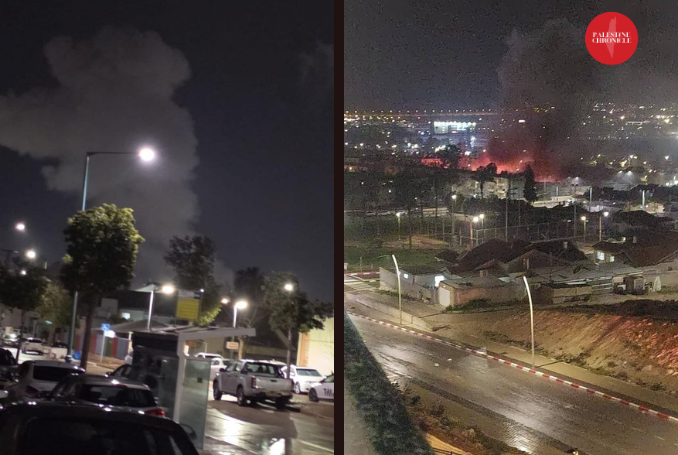

Israel begins rationing advanced interceptors as Iranian missile barrages persist, raising concerns over sustainability of air defense systems and stockpiles, the Wall Street Journal reported.
Key Takeaways
- Israel increasingly relies on lower-tier systems as Arrow interceptor stocks come under pressure.
- Iranian missiles continue to penetrate defenses, striking cities including Dimona and Arad.
- Analysts warn current pace of interception is unsustainable amid global shortages.
Under Pressure
Israel has begun rationing its use of high-end missile interceptors as sustained Iranian barrages stretch its defensive capabilities, according to a report published in the Wall Street Journal on Friday.
The shift reflects mounting pressure on Israel’s multilayered air defense system, particularly its most advanced Arrow interceptors, which are designed to counter long-range ballistic missiles.
Recent strikes have exposed the risks of this recalibration. A pair of Iranian ballistic missiles hit the southern cities of Dimona and Arad after Israeli forces attempted interception using less advanced systems. The outcome highlighted the limits of relying on downgraded or modified munitions against higher-tier threats.
“The number of interceptors of every type is finite,” said Tal Inbar, noting that as stockpiles decline, “you have to make more careful calculations about what to use.”
Iranian missile strikes hit Dimona in the Naqab (Negev), injuring dozens and collapsing a building in apparent retaliation for Natanz attack.
Read the key developments and the full report here: https://t.co/euJZ1ta39A pic.twitter.com/DpA33X72cG
— The Palestine Chronicle (@PalestineChron) March 21, 2026
Lower-Tier Systems
Israel has increasingly turned to upgraded versions of its David’s Sling and Iron Dome systems to compensate for the need to conserve Arrow interceptors, according to the report.
Originally designed for shorter-range threats, these systems have been modified to engage more complex targets, including longer-range missiles and drones. However, their effectiveness against such threats has been inconsistent.
“We are trying to stretch it to the upper tier,” Ran Kochav reportedly said, adding: “It works well in some areas, and in others it doesn’t.”
This layered system—Iron Dome for short-range threats, David’s Sling for mid-range, and Arrow systems for long-range ballistic missiles—has been central to Israel’s defense. But the war has blurred these distinctions, forcing systems to operate beyond their intended roles.
‘Scarce National Resources’
Since the start of the war, Iran has launched more than 400 missiles and hundreds of drones toward Israel, maintaining a steady pace even after initial surges. Additional projectiles from Lebanon have further complicated the defensive picture.
Each incoming missile now requires a calculation: whether to intercept or allow it to land in unpopulated areas, and which system to deploy, the WSJ reported.
The result is a constant balancing act between immediate protection and long-term sustainability of interceptor stockpiles.
⚡️ 🚨 The fierce battle of Iranian missiles with Western multi-layered defenses in Dimona, occupied Palestine pic.twitter.com/zg1HtU7rG5
— Middle East Observer (@ME_Observer_) March 21, 2026
“This is not over,” said Ahmadiel Ben Yehuda, a resident near the Dimona strike, reflecting a broader sense of ongoing threat.
The pressure is not limited to Israel. Across the region, US and allied systems are facing similar shortages, particularly for advanced interceptors such as those used in THAAD systems.
“We are vaporizing many years of production in the last couple weeks,” said Tom Karako, warning that even with increased manufacturing, replenishing stockpiles will take years.
Analysts say the current model—defending against large volumes of relatively inexpensive missiles and drones using costly, limited interceptors—is inherently unsustainable.
“These are scarce national resources,” Karako said. “That’s not something that we can keep doing.”
(PC, WSJ)







Be the first to comment