
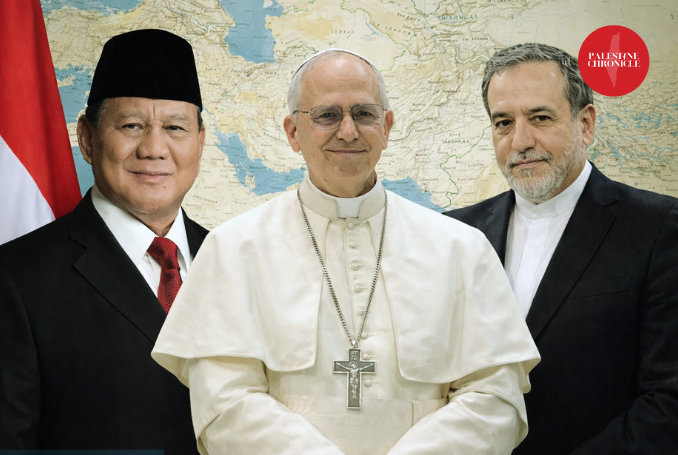

Israeli attacks continue across Gaza and Lebanon as Iran rejects negotiations, regional strikes spread, and global leaders urge de-escalation.
Gaza Police Vehicle Targeted
Israeli attacks on the Gaza Strip continued despite the ceasefire announced last October, with Palestinian authorities reporting the killing of eight police officers in central Gaza.
According to Gaza’s Interior Ministry and National Security authorities, Israeli aircraft targeted a police vehicle traveling on Salah al-Din Street near the entrance of the town of Al-Zawayda in the central Gaza Strip.
The strike killed eight members of the Palestinian police, including Colonel Iyad Abu Youssef, director of the intervention police in the central governorate.
The ministry said the attack also wounded several people in the area.
“Eight members of the Palestinian police were killed, including the director of the intervention police in the central governorate, Colonel Iyad Abu Youssef,” the ministry said.
The Gaza Health Ministry also reported additional casualties during the past 24 hours, saying five Palestinians were killed, including one who later died from earlier injuries, while eight others were wounded.
Israeli attacks have continued despite the ceasefire declared last October. According to Palestinian authorities, the total number of Palestinians killed since that announcement has reached 663, while 1,762 people have been injured. Authorities also reported recovering the bodies of 756 Palestinians during the same period.
Tammoun Massacre: Israeli Forces Kill Palestinian Family as Gaza Attacks Continue
Lebanon Death Toll Mounts
The escalation has also intensified in Lebanon, where Israeli attacks have caused hundreds of casualties since early March.
According to the Lebanese Health Ministry, at least 850 people have been killed in Israeli attacks across Lebanon since March 2. The ministry said the victims include 107 children, while more than 2,100 others have been injured.
Hezbollah Announces New Attacks
Amid the escalating confrontation, Hezbollah announced several operations targeting Israeli military positions.
In a statement, the group said its fighters targeted the Tsnobar logistics base in the occupied Syrian Golan with a rocket barrage.
In another statement, Hezbollah said it targeted the Kila barracks in the occupied Golan Heights with rockets.
The group also reported striking an Israeli Merkava tank in the Taybeh project area using a guided missile. According to Hezbollah, the tank was seen burning after the strike.
The group also said its fighters fired rockets at a gathering of Israeli soldiers near the border town of Adaisseh.
Hezbollah’s military media said Israeli forces attempted to advance near the Lebanese town of Al-Khiam, where resistance fighters confronted them using light and medium weapons as well as rocket-propelled grenades.
Night of Escalation: Iran Launches 53rd Strike Wave as Hezbollah Joins Attacks
Iran Rejects Negotiations
Iranian officials have continued to reject calls for negotiations with Washington amid the ongoing US-Israeli war on the country.
In an interview with CBS News, Iranian Foreign Minister Abbas Araghchi said Tehran had not asked for negotiations or a ceasefire. “We have never asked even for negotiation. We are ready to defend ourselves as long as it takes,” Araghchi said.
He added that Iran sees no reason to engage in talks with the United States.
“We don’t see any reason why we should talk with Americans,” he said, adding that there have been no “good experiences talking” with Washington.
Araghchi also criticized comments made by US officials regarding the war. He cited remarks by US Defense Secretary Pete Hegseth, who said the United States would show “no quarter, no mercy for our enemies.”
According to Araghchi, “simply saying such words constitutes a war crime under international law.”
He also criticized US President Donald Trump for comments regarding strikes on Iran’s Kharg Island.
Araghchi also denied that Iranian strikes had targeted civilian infrastructure, saying Tehran was responding to American military assets.
‘No Ceasefire Now’ – Iran Says War Will Continue Until ‘Aggressors Regret’ Attacks
Resistance Allies in Ceasefire
Iranian officials have also emphasized that any future agreement would involve Tehran’s regional allies.
A senior Iranian security official told Al-Mayadeen that a ceasefire scenario is not currently under consideration.
However, he said that if an agreement were eventually reached, Iran’s allies would be included.
“Our strategic partners in the Axis of Resistance will be part of it in all circumstances,” the official said.
He added that those who supported Iran during the war should benefit from its eventual outcome.
Drone Shot Down in Saudi Arabia
Saudi Arabia said its air defenses intercepted and destroyed a drone in the country’s eastern region.
The Saudi Defense Ministry said the unmanned aerial vehicle was shot down in the Eastern Province.
Rockets Hit Baghdad Facility
Regional tensions also spread to Iraq, where rockets struck a logistics support center at Baghdad International Airport.
Local media reported that four Iraqi security personnel were injured in the attack.
A security source told Shafaq News that the facility was hit by rockets, injuring members of the Iraqi security forces stationed there.
Authorities later discovered the launch platform inside a Kia pickup truck in the Radwaniyah district.
The vehicle was reportedly equipped with multiple launchers used to fire rockets at the facility.
Air raid sirens were activated inside the logistics support center and at the US Embassy in Baghdad as a precaution amid fears of further attacks.
Iraqi Kurdistan Energy Halt
In northern Iraq, oil and gas production across the Kurdish region has been halted following attacks on energy infrastructure.
The Kurdish Regional Government’s Ministry of Natural Resources said all oil and gas fields, refineries, and energy facilities had been targeted.
The ministry described the attacks as “terrorist attacks” carried out by “outlaw militias.”
The assaults forced a complete suspension of production and halted exports.
Officials also criticized the central government in Baghdad, saying it had not taken effective measures to prevent the attacks.
From ‘Come to Dubai, Habibi’ to ‘Run from Dubai’: War Reshapes Viral Meme
Hormuz Shipping Crisis Deepens
The war has also disrupted global shipping routes through the Strait of Hormuz.
UK Energy Secretary Ed Miliband said London is discussing options with international allies to reopen the strategically vital waterway.
“It is very important that we get the Strait of Hormuz reopened,” Miliband said.
He said the UK is working with partners, including the United States, to examine possible measures to secure the route.
“Any options to help the strait reopen are being looked at,” he said.
The strait is one of the world’s most important transit routes for oil and gas exports.
US President Donald Trump has called on several countries, including China, France, Japan, South Korea, and the UK, to send naval vessels to secure the passage.
Iran’s Role in Energy Stability
The war on Iran has also shaken global energy markets, with analysts increasingly pointing to Iran’s influence over supply routes.
According to Reuters, a message sent by Saudi oil giant Aramco to its buyers indicated uncertainty about how April shipments would be exported.
The company said supplies might leave either through the Red Sea or the Gulf.
One regular buyer told Reuters the situation reflects Iran’s leverage over the duration of the conflict.
“Maybe it’s better to call Iran to know when this war will end so I can get my oil,” the buyer said.
Analysts warned that Iran’s ability to deploy low-cost drones and disrupt maritime traffic could continue to affect global shipping routes even after hostilities end.
Indonesian Leader Urges Mediation
Indonesia’s President Prabowo Subianto said Iran is wary of entering new negotiations with the United States.
In an interview with Bloomberg, Prabowo said Iranian officials told him they were cautious about talks with Washington because they felt they had been deceived in the past.
“They really just have to survive,” he said, referring to Iran’s position in an asymmetrical conflict.
Prabowo said he would be willing to mediate if both sides agreed to negotiations.
“We are all confused,” he said of the war. “And I’m saddened. I don’t feel there’s any rationality in this.”
From ‘Come to Dubai, Habibi’ to ‘Run from Dubai’: War Reshapes Viral Meme
Pope Calls for Ceasefire
Amid the widening conflict, Pope Leo XIV called on all parties to halt the fighting and reopen dialogue.
Speaking after the Angelus prayer in St. Peter’s Square, the pope highlighted the humanitarian toll of the war.
“The peoples of the Middle East have been suffering the atrocious violence of war for two weeks,” he said.
“Thousands of innocent people have been killed, and many others have been forced to abandon their homes.”
He also condemned attacks on civilian infrastructure, including schools, hospitals, and residential areas.
“I renew my prayerful closeness to all those who have lost their loved ones in the attacks that have struck schools, hospitals, and residential areas,” he said.
“Cease the fire! Let paths of dialogue be reopened!” the pope said.
He added that continued violence cannot produce peace.
“Violence can never lead to the justice, the stability and the peace that peoples are awaiting,” the pontiff said.
(Al-Mayadeen, Anadolu, Reuters, NNA, Shafaq News, Bloomberg. PC)



Be the first to comment