
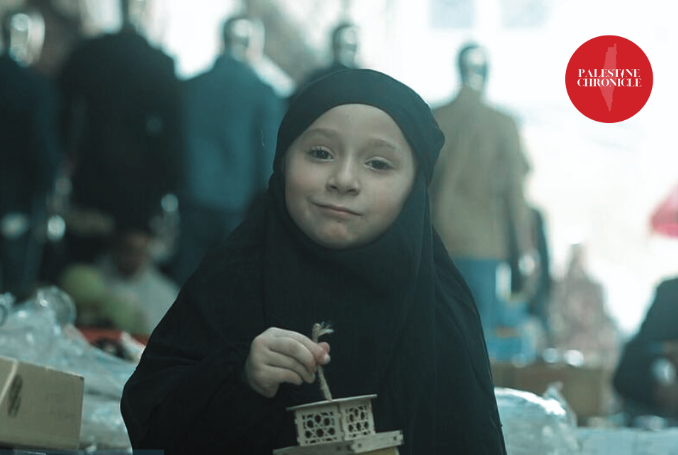

Amid mass graves and the immeasurable loss of loved ones, hope and faith once again prevail in Gaza.
Key Takeaways
- Palestinians in Gaza mark Ramadan among widespread destruction and displacement after the genocide.
- Mosques are destroyed, and food shortages reshape daily religious life and family traditions.
- Children and families revive decorations and communal rituals as acts of sumud.
- Israeli restrictions and continued violations prolong hardship despite the ceasefire.
- Joy persists through faith, solidarity, and shared survival across devastated communities.
Lanterns and Ruins
When night falls in Khan Yunis, the glow does not come from intact homes or lit streets. It comes from wires tied between tents and shattered concrete.
Children climb broken walls to hang colored lanterns above what remains of the Abu Sufyan neighborhood. Beneath them lie the ruins of houses destroyed during the genocide. Above them hangs Ramadan.
The decorations flicker only a few hours each evening, powered by small generators, yet residents insist the light must remain. For them, the act is not decorative but restorative — a declaration that life continues despite systematic destruction.
“This tradition never stopped,” Yasser Al-Sattari, who lost his home, wife and several relatives during the genocide, told Anadolu Agency. He added, “We refuse to let the genocide steal Ramadan joy from our children.”
Across Gaza, similar scenes unfold. Banners reading “Ramadan Mubarak” stretch across streets that no longer exist. Lanterns sway above tents. Children laugh in places where entire families were buried beneath rubble.
The genocide killed more than 72,000 Palestinians and injured over 171,000, according to Gaza health authorities. Entire neighborhoods remain flattened, and thousands are still missing under debris.
Yet Ramadan arrives regardless.
“We survived,” Sattari told Anadolu. “And that is why we celebrate.”
Ramadan Under Genocide: Gaza Fasts Through Ruins While West Bank Faces Lockdown
Worship Without Mosques
Ramadan is traditionally marked by crowded mosques and communal prayer. In Gaza, prayer now takes place on rubble.
At the destroyed Al-Hassaina mosque in Gaza City, families sleep and cook where worshippers once stood shoulder to shoulder. Its dome lies collapsed on broken stone, and washing lines stretch between fractured columns.
“I can’t bear to look at it,” longtime volunteer Sami Al-Hissi told Reuters. “We used to see our loved ones here. Now there are no loved ones and no mosque.”
Israeli forces destroyed at least 835 mosques and damaged 180 others during the genocide, according to Gaza’s government media office. Authorities have erected hundreds of makeshift prayer spaces using wood and plastic sheets salvaged from greenhouses and tents.
On the first night of Ramadan, worshippers performed Taraweeh prayers beneath drones circling overhead. Others returned to partially destroyed historic mosques, praying among debris and exposed foundations.
Despite cold weather, they gathered barefoot on carpets laid over broken floors. Some arrived directly from displacement camps, others from shelters built inside former courtyards.
Gaza this Ramadan, 2026. pic.twitter.com/WL0W0YlkqC
— Muhammad Smiry 🇵🇸 (@MuhammadSmiry) February 17, 2026
“Despite the destruction of mosques and homes, we came to worship,” one worshipper told AFP.
But even prayer reflects material hardship. Nearly 1.9 million displaced Palestinians remain in tents lacking basic services. Electricity is largely unavailable after more than 5,000 kilometers of networks were destroyed.
Ramadan tables have changed as well. Food shortages and high prices leave families struggling to prepare even a single main dish.
“There is no cash among the people,” Gaza resident Waleed Zaqzouq said. “Ramadan requires money.”
Nivin Ahmed, living in a tent in Al-Mawasi, described “mixed feelings” as the holy month began. “I can barely prepare one dish,” she said. “I cannot invite anyone.”
Even so, families gather, often sharing aid distributions for iftar. Bread, rice, and lentils replace traditional meals once prepared for extended relatives.
#RamadanKareem to everyone marking the beginning of Islam's Holy Month.
This is a time centred on reflection, compassion & care for those most in need.
In #Gaza, it is the third year in a row that families will mark Ramadan during an unprecedented humanitarian disaster,… pic.twitter.com/L36oPccqq4
— Philippe Lazzarini (@UNLazzarini) February 18, 2026
Hunger and Continuity
Markets in Gaza remain sparse. Work has largely disappeared. Aid deliveries are insufficient due to Israeli restrictions on crossings despite the ceasefire.
Cold weather and flooding continue to threaten displacement camps. Children have died from winter conditions, while damaged buildings collapse in heavy rain.
Yet daily rhythms continue.
At sunset, families break their fast together inside tents illuminated by small bulbs or candles. On beaches and streets, artists write “Welcome Ramadan” in sand and paint messages onto shattered walls.
Calligrapher Hani Dahman decorated ruins in Khan Yunis so children could feel the atmosphere of the month. “We are sending a message to the world that we seek life,” he said.
Nearby, children ran beneath the decorations, treating the evening as a celebration rather than survival.
In Deir al-Balah, artist Yazeed Abu Jarad sculpted Ramadan greetings in the sand. In displacement camps, neighbors share tea and simple meals before dawn prayers.
Maha Fathi, displaced from Gaza City, described renewed solidarity. “People empathize with each other again,” she said. “Seeing decorations fills us with hope.”
The genocide erased infrastructure and institutions but also reshaped social bonds. Families who once celebrated separately now gather collectively in camps, sharing what little they have.
Ramadan thus becomes communal survival rather than private tradition.
Despite untold destruction, a horrific genocide, and a broken international system, Palestinians continue to uphold the tenets of their faith, embracing Ramadan with unwavering resilience and hope.
Their strength and steadfastness inspire us to remain committed to sharing the… pic.twitter.com/e3siA8gal1
— The Palestine Chronicle (@PalestineChron) February 17, 2026
Faith and Sumud
The experience is neither purely grief nor joy but a coexistence of both.
Fedaa Ayyad, who lost relatives during the genocide, said she cannot fully feel the holiday. “There is no joy after losing loved ones,” she told the Associated Press. Yet she still participates in fasting and prayer.
Others describe Ramadan itself as resistance.
Abu Adam, arriving for dawn prayer in heavy winter clothing, said worship continues despite attacks. “Even when the area was targeted, we remained determined,” he said.
This persistence reflects sumud — steadfastness — expressed through ordinary acts: fasting, decorating, praying, gathering.
Children ask for lanterns that their parents cannot afford. Families improvise celebrations using handmade decorations. Communities organize shared meals from aid supplies.
Ramadan nights include laughter as well as mourning. Fireworks appear over camps. Children play among ruins “as if on a picnic,” one resident said.
The genocide reshaped daily life but not belief—instead, faith structures time when institutions have collapsed.
Despite this, Ramadan rituals continue across the enclave.
Lanterns hang over broken streets. Prayers rise from tents. Families share minimal meals. Children still anticipate sunset.
In Gaza, Ramadan no longer resembles the past — but it remains unmistakably present.
The lights are dim and fragile. The buildings are gone. The losses are immeasurable.
Still, every evening, the lanterns turn on.
(PC, AJE, Anadolu, Palestinian Media, Independent, US Media)
The Palestinians are the greatest people in the world, in all of History!