
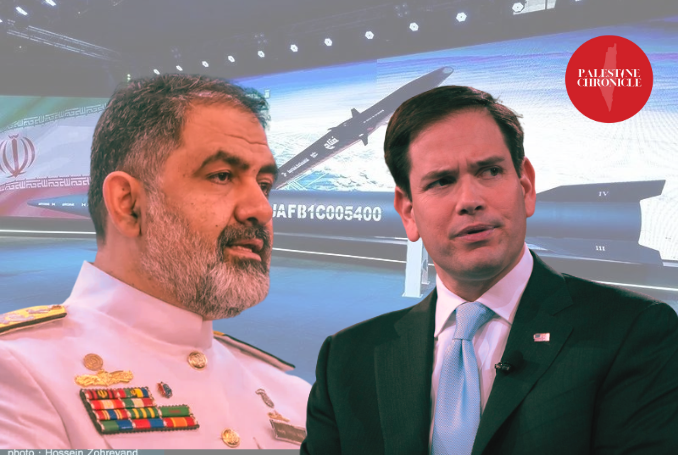

Threats of US military action against Iran grow despite ongoing talks, prompting regional warnings and Iranian deterrence moves.
Key Developments
- Trump adviser predicts high likelihood of military action within weeks.
- Iran says negotiations and military readiness will proceed simultaneously.
- Israeli officials openly advocate a regime-change scenario.
- Turkiye and regional actors warn against war’s consequences.
- Nuclear talks continue, but fundamental disagreements remain unresolved.
War Signals
Senior political and military figures in Washington and Tel Aviv are increasingly signaling a possible military confrontation with Iran, even as negotiations between the two countries continue.
According to Axios, a senior adviser to US President Donald Trump said the president is growing frustrated with officials urging caution and believes there is a 90 percent chance of military action within weeks. The adviser suggested the White House is approaching a decisive moment, although American sources acknowledged additional time may still be required to prepare an attack.
The report described the Trump administration as closer to a major war in the Middle East,” that could begin soon. Any operation would likely be extensive, lasting weeks and resembling a full-scale war rather than a limited strike.
Israeli officials expressed similar expectations. Sources cited by Axios said the Israeli government is preparing for a near-term conflict and pushing what they called an extreme scenario targeting not only Iran’s nuclear and missile programs but also regime change itself.
Israeli Infrastructure and Energy Minister Eli Cohen said publicly that toppling the regime in Iran is the only guarantee of stability in the region, adding that Washington understands this position. Former Israeli military intelligence chief Amos Yadlin also told Israeli media that the current moment represents the closest yet to US military action.
The warnings come months after a joint Israeli-US attack on Iranian nuclear facilities during a brief June confrontation, raising fears that a wider and more sustained conflict could now follow.
What Iran’s Hormuz Drill Means Before US Talks in Geneva – News Analysis
Diplomacy Persists
Despite the rhetoric, negotiations between Washington and Tehran continue in parallel.
A second round of indirect talks concluded in Geneva, with Iranian Foreign Minister Abbas Araghchi stating the sides agreed on “shared principles” that will guide drafting a potential agreement. Oman’s Foreign Minister Badr Al-Busaidi described the discussions as making “good progress,” while US Vice President JD Vance said the talks were productive “in some ways.”
However, Vance emphasized Iran had not yet accepted certain “red lines” established by Trump. He warned that the president retains the authority to end diplomacy if he believes negotiations have reached their limits.
Araghchi, speaking after the talks, described the atmosphere as “more constructive” and confirmed both sides would begin working on draft texts for a possible deal. The International Atomic Energy Agency’s director, Rafael Grossi, also expressed readiness to support negotiations following technical discussions with the Iranian delegation.
Iran maintains its nuclear program is peaceful and insists sanctions relief remains essential for any agreement. Tehran also says negotiations must remain limited to nuclear issues, rejecting broader security demands.
These diplomatic developments underscore a dual reality: talks continue and show progress, yet expectations for conflict remain high.
Khamenei’s Stern Message – Iran Temporarily Closes Hormuz as Geneva Talks Advance
Deterrence and Readiness
Alongside negotiations, Iran has intensified military signaling aimed at deterrence.
Government spokeswoman Fatemeh Mohajerani said Tehran is pursuing negotiations and defensive readiness “simultaneously” to protect national interests and security. Iranian naval commander Admiral Shahram Irani warned that regional states can ensure maritime security themselves and that any non-regional naval force would face stronger resistance.
Another senior commander previously indicated Iran could close the Strait of Hormuz if ordered, a move with significant global economic implications.
Iran also announced joint naval exercises with Russia in the Gulf of Oman and the northern Indian Ocean. The drills follow broader maneuvers designed to demonstrate preparedness and signal strategic partnerships amid rising tensions.
Diplomatic friction has expanded beyond Washington. Tehran summoned the German ambassador over what it described as hostile positions taken by German officials, saying the actions violate international law and the UN Charter.
Together, the measures reflect Iran’s strategy of coupling negotiations with visible deterrence — maintaining openness to talks while preparing for confrontation.
From the US-Led Rules-Based Order to Multipolar International Law
Regional Stakes
Regional actors warn that the consequences of war would extend far beyond the two primary parties.
Turkish President Recep Tayyip Erdogan reiterated opposition to any military action against Iran, saying such a strike would benefit no one and the region would suffer most. Ankara continues encouraging dialogue and maintains high-level contacts with both sides.
The possibility of a broader conflict alarms governments across the Middle East, where energy routes, trade flows, and security arrangements could be disrupted. Analysts cited by Axios warned a major war could reshape the region and influence the remaining years of Trump’s presidency.
At present, diplomacy remains active but fragile. Washington continues to insist on limits beyond nuclear issues, while Tehran refuses to negotiate its defensive capabilities. Israeli officials continue pressing for a harder approach, while regional powers urge restraint.
The result is a parallel track: negotiations moving forward while military preparations accelerate.
For now, no final decision has been announced. Yet statements from US and Israeli officials suggest the coming weeks may determine whether diplomacy continues — or whether the region moves toward a new war.
(Iranian Media, US Media, AJA, Anadolu, Al-Mayadeen, PC)


The Fourth Reich, Israelica, needs to be dismantled immediately: from within. My US government does not work for us, it, not they/or them, IT, works for the Israeli Jewish Nazis. Wasrael + Amessica = Israelica. By paying taxes, we enable that collection of sociopaths and sycophants.
War-Tax Resistance!
Civil Disobedience.
We The People need to amputate that poisoned limb from our greater body, and save our country. We need to appeal to our leaders and show them that they are here to work for us, not the Jewish Zionist Nazis who only want to murder children.
WHY ARE WE EVEN HAVING THIS CONVERSATION…..
because most people are afraid of being called antisemite.
Grow a pair 😉 …….
these statements mean NOTHING!!…and should NOT be mentioned….NO ONE cares what israel wants…trump is TOO STUPID and deep in Alzheimers to even know what his own words mean….And with the usa mid-terms rapidly approaching, a quag-mire war in the Middle East would DESTROY not only trump and maga but the entire usa itself…anonymous officials saying something is a CLEAR indication that what is being reported is FICTION ….I would say the probability of war between usa and IRAN is less than 5%……now, or at any time in the future
“a senior adviser to US President” and “Israeli officials”: are the same damn Zionists!