
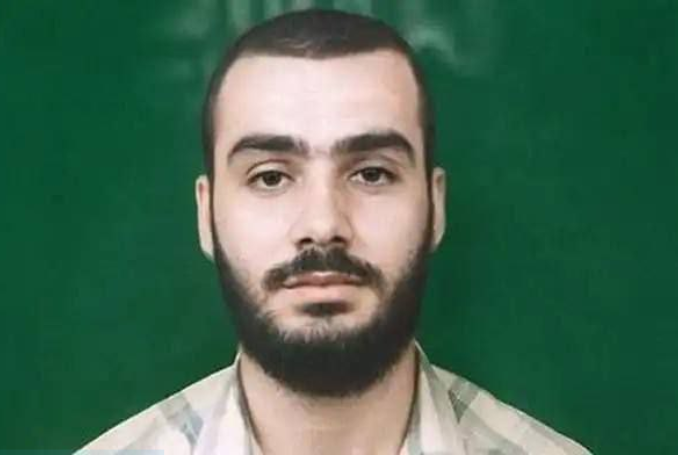

Muhammad Sinwar, who led Hamas’ military operations during the Gaza war, spent more than 30 years in hiding while overseeing key attacks, logistics networks, and preparations for the October 7 operation, according to accounts cited by Al-Jazeera.
Following the announcement by the Al-Qassam Brigades, the military wing of the Palestinian Resistance Movement Hamas, confirming the killing of Muhammad Sinwar, new details have emerged about one of the most elusive figures in the movement’s military leadership.
Sinwar assumed command of the Brigades’ military staff during the genocidal war on Gaza, succeeding Mohammed al-Deif.
For more than three decades, he remained largely out of public view, evading Israeli intelligence as one of its most sought-after figures. His death was announced following an intense Israeli bombardment targeting the area around the European Hospital east of Khan Yunis on May 13, 2025.
Since joining the Qassam Brigades in 1992, Sinwar followed a strict policy of concealment.
‘We Pledge to Continue the Path’: Full Speech by Newly Introduced Abu Obeida
He never appeared publicly with his face uncovered, resulting in limited available intelligence about his movements or appearance. Israeli occupation authorities considered him a central operational figure, particularly during the period surrounding the October 7, 2023, operation known as Al-Aqsa Flood.
‘Knocking on Doors’
According to Al-Jazeera, approximately one year before the launch of that operation, Sinwar, then head of the Brigades’ operations branch, met with a small group of political writers in Gaza.
During the meeting, he spoke briefly about the issue of Palestinian prisoners, stating that their release would only come “through knocking on doors,” a remark whose meaning became clearer after the events of October 7.
Sinwar had suffered a spinal injury during an Israeli assassination attempt in the 2014 Gaza war, leaving him with a noticeable curvature of the back. Despite this, sources cited by Al-Jazeera say he remained closely involved in operational planning and field oversight, maintaining tight security measures in all his movements.
He reportedly used old or unremarkable vehicles to avoid detection and, at times, traveled in cars resembling public transport. When visiting his family home in the Khan Yunis refugee camp during periods of relative calm, he reportedly employed various forms of disguise to prevent identification.
As part of the preparations for the October 7 operation, Sinwar requested the production of large quantities of a specific type of rocket with particular range specifications, without disclosing its intended purpose to those manufacturing it, the report explained.
On the morning of the operation, thousands of these rockets were launched as part of the ‘Rajum’ system, providing widespread fire cover across settlements surrounding Gaza.
BREAKING: Al-Qassam Announces Killing of Abu Obeida, Senior Commanders
Field Role and Military Oversight
Testimonies cited by Al-Jazeera indicate that Sinwar maintained direct involvement in operational details and frequently visited frontline areas, including eastern Gaza.
During the 2014 ground invasion of Khan Yunis—referred to by Palestinian factions as the ‘Eaten Straw’ battle—he served as commander of the Khan Yunis Brigade and was directly involved in fighting in the area.
In 2015, Sinwar assumed responsibility for overseeing weapons supply routes and logistical support to combat units, succeeding Muhammad Abu Shamala, who was killed during the 2014 war.
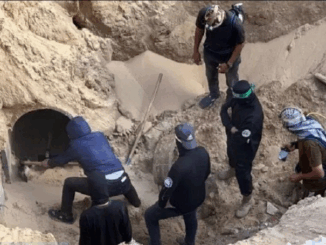
He reportedly built and maintained relations with external actors involved in weapons supply networks and spent extended periods underground, supervising operations from within the tunnel system.
Among the operations attributed to Sinwar was the 2005 attack near the Al-Matahin checkpoint north of Khan Yunis, which targeted an Israeli intelligence facility. He was also responsible for overseeing the detention of Israeli soldier Gilad Shalit following his capture in 2006, during which Shalit remained hidden for five years.
Sinwar also supervised internal investigations following a failed Israeli special forces operation in eastern Khan Yunis in November 2018 and coordinated the subsequent response, which included targeting an Israeli military bus near the Gaza border.
Fluent in Hebrew, Sinwar closely followed Israeli political and military affairs. Over the course of his career, he played a central role in establishing an internal communications network for the Qassam Brigades, a move seen as a response to vulnerabilities exposed during the 2012 war.
In later years, he reportedly also oversaw the creation of an Administration and Organization Unit within the Brigades, along with a quality control body for military production.
(PC, AJA)



EVERY PALESTINIAN IS A FORCE OF RESISTANCE AGAINST THE AXIS OF EVIL
WETHER THE ZIONIST MUSLIM LEADERS LIKE IT OR NOT