
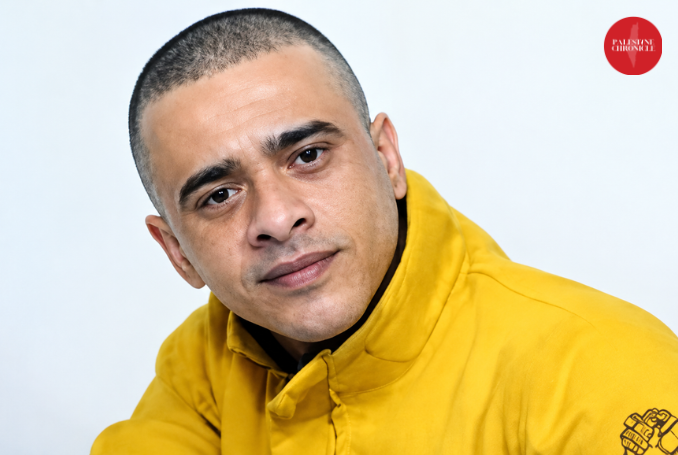

Israeli guards’ own messages reveal routine beatings, severe injuries and celebration of a Palestinian prisoner’s death inside Israel’s detention system.
Key Takeaways
- Israeli prison guards described beating Palestinian detainees as “routine,” with one saying prisoners would not enter her wing without a “busted kidney.”
- Guards celebrated the death of Thaer Abu Asab following a mass beating, while testimony indicates the assault was carried out with command-level knowledge and authorization.
- The investigation exposed violence extending far beyond Abu Asab’s killing, with one tactical-unit guard telling investigators that senior commanders accepted the practice: “That was the policy.”
Israeli prison guards joked about leaving Palestinian detainees with damaged kidneys, described becoming exhausted from beating newly arrived prisoners, celebrated after a Palestinian man died following an assault, and told investigators that severe violence had become routine inside Israel’s prison system.
These accounts did not come solely from Palestinian prisoners, their lawyers or human rights organizations.
They appear in Israeli guards’ own WhatsApp messages and testimony under questioning, obtained during an investigation into the death of Palestinian prisoner Thaer Abu Asab at Ketziot Prison in November 2023.
“I swear, girl, I beat the shit out of them,” guard Oshrit Eliga wrote to a friend in one exchange.
“You’ve never seen me like this. It’s routine. Whatever batch comes in, if he doesn’t end up with a busted kidney, I’m not letting him into the wing.”
In another exchange concerning 70 Palestinians brought into detention after October 7, Eliga wrote that “everyone got their own personal welcome.”
“We got so tired of beating them, the commander took off his belt and beat the shit out of them,” she wrote.
One member of Keter, the Israel Prison Service’s tactical rapid-response unit, described what happened in Abu Asab’s cell as unremarkable within the prison.
“It was kind of routine, so we didn’t report the incident to anyone,” the guard told investigators.
“As far as the senior commanders were concerned, it was fine. That was the policy.”
A Question about a Ceasefire
Abu Asab was serving a 25-year sentence when he was fatally beaten at Ketziot Prison in November 2023.
According to testimony collected by investigators, the immediate trigger was a question: Abu Asab had asked a guard whether a ceasefire had been reached.
The question was passed to a commander, who decided to make clear to Abu Asab and the other prisoners that there was no ceasefire.
One prisoner told investigators that during the evening count, detainees were kneeling with their hands above their heads and their faces lowered when approximately 15 guards and 15 Keter personnel arrived.
“They called Thaer’s name, and the Keter unit came into the cell. They beat us with batons for five minutes, everyone in the room,” he testified.
The prisoner said the guards repeatedly referred to Abu Asab’s question about a truce during the assault.
When they finally left, he said, the prisoners were “lying broken on the floor.”
Abu Asab did not get up. “He was unconscious. He got beaten the most. He was bleeding, and his whole face was blue. His hands were covered in blood.”
Another prisoner gave investigators a similar account, saying everyone in the cell was beaten but Abu Asab received the worst of the violence.
Abu Asab was transferred to Soroka Medical Center in Be’er Sheva, where he was pronounced dead. According to the indictment, the severe beating caused an injury to his heart that led to his death.
‘Boom, Dead Prisoner’
As Abu Asab lay critically injured, messages were already circulating among prison guards.
One guard wrote to her partner that CPR was being performed on a prisoner in the prison clinic and expressed hope that he would die.
Another described the violence in celebratory terms, writing: “Holy shit, what a count. We fucked them up so bad.”
A third wrote about the amount of blood in the prison wings before reporting that CPR was being performed “because we beat him.”
Then came the update:
“He’s dead. Listen, it’s funny how it all happened in an instant: Boom, count. Boom, dead prisoner.”
Eliga separately informed her partner of Abu Asab’s death. “Baby, an update: He’s just died,” she wrote shortly afterward.
She said she was “very happy and satisfied,” adding that “there was a lot of blood and they broke them.”
Her messages also indicated that the possibility of serious violence had been discussed before guards entered the cells.
“The commander knew something like this would happen,” she wrote. “He told us in the briefing and asked anyone who felt they couldn’t do it to say so, because he really wanted to break them.”
‘Instruction Was to Beat Them’
Testimony from the guards themselves reinforced prisoners’ accounts that the violence was organized.
Guard Diana Troitsky told investigators that during a briefing before the evening count, the commander said he had learned that two of his friends had been killed in Gaza and was “shattered.” The report about the soldiers’ deaths later proved to be a rumor.
“We understood that we needed to beat them so they’d understand there was no cease-fire,” Troitsky testified.
According to her account, the commander told the guards that whatever happened that evening would be his responsibility, that he had the approval of the shift commander and prison commander, and that “everyone knew what was going to happen.”
“He said we shouldn’t be afraid and should do what he says,” she recalled.
Troitsky said the guards subsequently “lost it.” “Kicking, punching the prisoners. All the guards and all the Keter people in the cell took part in the assault,” she testified.
The commander, she said, saw guards draw their batons but did nothing before eventually shouting “Stop” when “he decided they’d been beaten enough.”
Guard Avia Arusi also testified that the commander was present when Abu Asab was identified as the prisoner who had asked about the ceasefire.
“They started beating him like crazy,” she said. Arusi later told investigators that the commander had ordered the guards into the cell.
“They were just beating the prisoners. They were on the floor, crying,” she said. “The commander was at the cell entrance. He saw everything. He was the one who gave the order.”
Eliga likewise told investigators that “all the guards used excessive force.”
“The instruction was to beat them, but not with batons,” she said, explaining that when the commander ordered Keter personnel to enter a cell, “‘Goes in’ means ‘beats them.’”
‘It’s Routine’
The evidence gathered by investigators indicates that the violence did not begin or end with Abu Asab.
Eliga’s private messages provide some of the clearest examples.
In December 2023, approximately one month after Abu Asab’s death, she discussed preparations for the arrival of another group of Palestinian detainees.
She told a friend that her baton had already “been disinfected more than a few times” and described guards being given prisoners behind a partition and effectively being told to “go nuts.”
She then described personally participating in the violence.
“I swear, girl, I beat the shit out of them,” she wrote. “You’ve never seen me like this. It’s routine.”
Her benchmark for admitting newly arriving prisoners into the wing was particularly stark: “if he doesn’t end up with a busted kidney, I’m not letting him into the wing.”
Another exchange described guards becoming physically exhausted from beating detainees.
“We got so tired of beating them, the commander took off his belt and beat the shit out of them,” Eliga wrote.
“And the screaming, like little girls, like they were punching bags.”
Eliga later told investigators that she regretted the messages, saying she had been “trying to impress people,” had “got carried away” and had been bragging.
Beyond Abu Asab’s Cell
Other testimony described similar assaults elsewhere in Ketziot. Troitsky acknowledged that on the same evening Abu Asab was beaten, guards entered another cell in Wing 21 and assaulted prisoners there.
“The same thing happened there as in Wing 24. They went into a cell and beat the prisoners,” she testified.
She also admitted slapping a Palestinian prisoner after being instructed to do so by the commander, saying he wanted female guards to “take part in everything that happens, not stay on the sidelines.”
Messages from Arusi provided another indication that such violence was not exceptional.
She described guards attacking prisoners who had been praying loudly, saying they had tried to “test us because they see we’ve eased up a bit on the beatings.”
“So they tried praying out loud,” she wrote. “We went in and beat the shit out of them in the morning.”
Commanders Implicated
The investigation also raised questions about how far knowledge of the violence extended through the prison hierarchy.
As investigators confronted the main defendant with evidence contradicting his initial denials, he began describing a broader culture inside the Israel Prison Service.
He eventually implicated Ketziot Prison commander Brig. Gen. Yosef Knipes.
“The prison commander changes out of his uniform into Keter gear, goes into cells, and I hear screaming without knowing what’s happening inside,” he told investigators.
He also referred to security cameras being switched off before operations and described senior personnel of different ranks entering cells.
“What goes on there is harbu darbu,” he said, using a Hebrew expression meaning all-out mayhem.
Knipes denied the allegations. He said the accusations were “divorced from reality” and “a figment of his imagination,” insisting that operations were conducted according to procedure.
“The organization will not forgive anyone who made a mistake,” Knipes told investigators.
‘Torture Is Israel’s Policy’
The evidence from Ketziot emerges against a far wider record of Palestinian deaths and reports of abuse in Israeli custody since October 7, 2023.
Israeli veterans’ organization Breaking the Silence said the messages should not be viewed as evidence of an isolated prison scandal.
“Since October 2023, more than 100 Palestinians have entered Israeli custody alive and later left in body bags,” the group said.
“Israeli detention centers have essentially become torture camps. Torture is Israel’s policy.”
Palestinian Women Detainees Detail Abuse after Ben-Gvir Raids Prison with Family
(PC, Haaretz, Common Dreams, Breaking the Silence)




Be the first to comment