By Romana Rubeo 
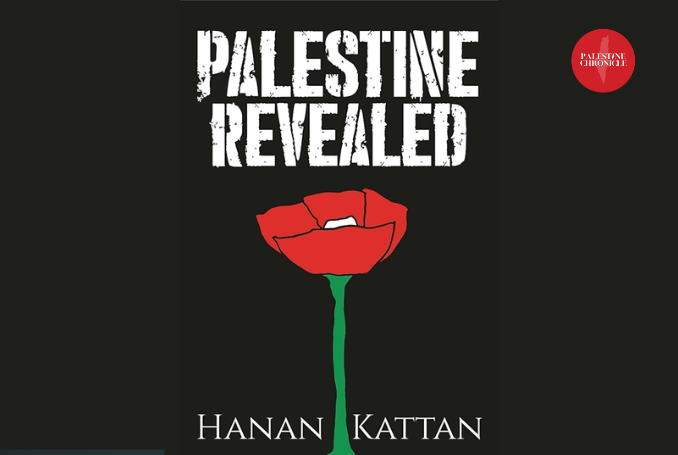
In Palestine Revealed, Hanan Kattan narrates Palestinian history through inherited memory rather than political chronology, presenting the ongoing Nakba as a lived, generational experience rooted in everyday life.
Hanan Kattan’s Palestine Revealed belongs to a growing body of Palestinian writing that refuses to separate history from lived experience.
Rather than presenting Palestine through diplomatic timelines or military chronologies, Kattan reconstructs it through memory: familial, sensory, and intergenerational. The result is a narrative that functions simultaneously as memoir, testimony, and historical introduction, a combination that makes it particularly accessible for readers encountering the subject for the first time.
The book opens with the experience of a border crossing. A childhood journey across the Allenby Bridge becomes the reader’s entry point into understanding the meaning of Israeli occupation. The scene is intimate: a baby crying, bags searched, soldiers shouting, long hours of waiting.
Yet from the outset, Kattan establishes the book’s central argument: Palestinian history is experienced most truthfully in ordinary moments.
Therefore, the personal quickly becomes collective: “All of us Palestinians get out and traipse over to a guard post. We are used to this process.”
What begins as a childhood memory transforms into generational trauma. Palestinians must face these obstacles every time they “cross back into the occupied homeland where both my mother’s and father’s families are from; where they have lived for generations upon generations.”
Kattan recalls how Israeli occupation soldiers forced families off buses and subjected them to degrading searches, describing the procedure as “systemic, ritualised humiliation.” Crucially, the scene is not presented as exceptional trauma but as routine. That distinction matters: the occupation appears not as an occasional eruption of violence but as a structure shaping daily life across generations.
“The guard post stands between us and a set of large buildings where we will be made to wait for hours, or even the whole day, undergoing checks.”
From there, the narrative moves backward through family stories of the Nakba and the powerful symbols that preserved a connection to the homeland despite displacement. Memory emerges not as sentimentality but as an archive.
“The first generation of survivors of the Nakba remember the scent of jasmine that climbed the walls of their Jerusalem villas, the specific pattern of tiles in their kitchens, and the way those kitchens smelled in the evening, when dinner was being prepared”.
The sensory precision serves an important purpose: it restores material presence to a history often discussed abstractly. Kattan explicitly reflects on memory’s evidentiary role:
“Does memory even matter? Is it real? Is it proof? For an entire people who were killed or expelled and forced to leave without their belongings, photographs, clothes – yes, memory is the only real thing. We learned, as Palestinians, that possessions and our homes can be stolen. But our memories cannot.”
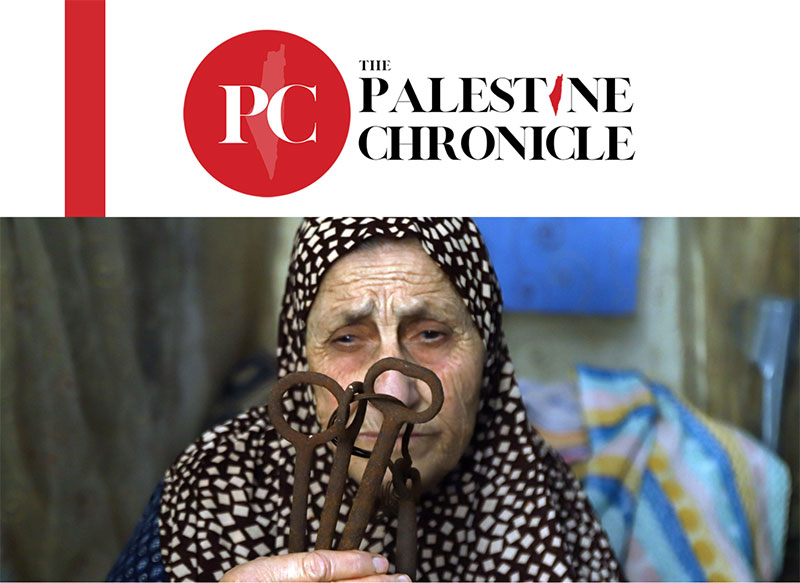
One recurring symbol embodies this argument: the house key. Like many Palestinian testimonies, Kattan treats the key as a material archive. Families carried them as “tangible proof that their homes had been owned by them and filled with their families.” The key, therefore, functions not as nostalgia but as documentation, as evidence against erasure.
What distinguishes Palestine Revealed from purely academic works is its refusal to separate emotional truth from historical explanation. Kattan recounts the expulsions of 1948, refugee dispersal, and settlement expansion, but always through the voices of relatives. Her mother’s memories of Haifa and Jerusalem are particularly central, delivered with “sorrow and anger, but also defiance and determination.” The emphasis is clear: dispossession did not erase identity.
This narrative approach places the book within a wider Palestinian storytelling tradition that foregrounds ordinary witnesses over official archives — a tradition strongly associated with Ramzy Baroud’s “people’s history” methodology.
Kattan’s work fits comfortably within that intellectual space, though it remains distinctly her own in tone and intimacy, drawing authority less from collected testimonies and more from inherited family memory.
Importantly, the book avoids portraying Palestinians solely as victims. Instead, they appear as guardians of a precise cultural identity expressed through food, traditions, language, and social rituals. Even exile becomes a site of identity formation rather than dissolution.
The writing style is deliberately clear and direct. For readers unfamiliar with Palestinian history, this clarity is one of its strengths. Kattan’s background as a filmmaker also lends the narrative a strikingly visual quality, making each scene unfold almost cinematically before the reader.
The book closes by reaffirming storytelling as an obligation rather than a choice. Each generation receives the narrative and passes it forward. The message is understated but firm: history survives through people, and people survive through memory.
Ultimately, Kattan offers a work of witness literature: accessible, personal, and pedagogical. By grounding national history in family experience, she invites readers to approach Palestine not as a distant geopolitical ‘conflict’, but as an ongoing Nakba — a continuous process of dispossession lived across generations rather than a closed chapter of the past.
(The Palestine Chronicle)
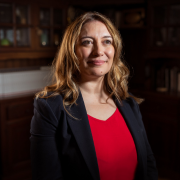
– Romana Rubeo is an Italian writer and the managing editor of The Palestine Chronicle. Her articles appeared in many online newspapers and academic journals. She holds a Master’s Degree in Foreign Languages and Literature and specializes in audio-visual and journalism translation.