
Yemeni forces struck Saudi military concentrations in Marib with missiles and drones, while Sanaa warned Türkiye, Pakistan and other states against providing political or military cover for Riyadh.
Key Developments
- Yemeni forces said a large number of missiles and drones struck Saudi military concentrations, warehouses, vehicles and equipment at the Sahn al-Jinn camp in Marib.
- The attack followed another major operation against Saudi-backed forces, which reportedly killed 58 people.
- Sanaa reiterated that Saudi military movements inside Yemen would be directly targeted under its “siege for siege” and “escalation for escalation” equations.
Yemeni forces launched a major missile and drone attack on Saudi military concentrations in Marib on Friday, as Sanaa simultaneously warned that countries joining or providing cover for Riyadh’s renewed campaign against Yemen would be treated as participants in the aggression.
The warnings acquire particular significance following the signing of the Mecca Joint Defense Agreement between Saudi Arabia, Türkiye and Pakistan, a new trilateral security arrangement under which an attack on one of the three countries would be treated as an attack on all.
Ansarallah officials directly addressed the implications of the new alliance, warning Türkiye and Pakistan against allowing the agreement to draw them into Saudi Arabia’s confrontation with Yemen.
Saudi Forces Targeted
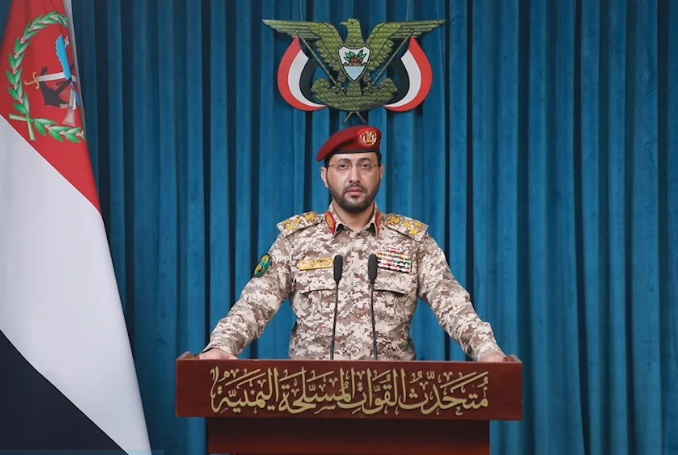
Yemeni Armed Forces spokesperson Brigadier General Yahya Saree announced that Saudi military concentrations at the Sahn al-Jinn camp in Marib had been targeted following close surveillance of their movements.
“These concentrations were struck, along with their warehouses, vehicles, and military equipment,” Saree said, adding that the operation involved a large number of missiles and drones.
He described the strikes as “top-tier and precise.”
According to the statement, Saudi Arabia has continued concentrating forces and preparing them for a new military confrontation inside Yemen.
Sanaa said it would therefore continue targeting Saudi military movements wherever they appear, reiterating the equations of “escalation for escalation” and “siege for siege.”
“We will not allow hostile plans against our country to go unanswered,” the statement said, warning that any new aggression would face “an immediate and forceful response.”
Yemeni forces also called on Yemenis serving in Saudi-backed formations to leave their positions before further strikes take place.
‘Attack on One is Attack on All’: Saudi Arabia, Türkiye, Pakistan Sign Defense Pact
Second Major Strike
The Sahn al-Jinn operation came only a day after Yemeni forces announced another large-scale attack on Saudi-backed military concentrations in al-Ruwaik, al-Abr and al-Thaniyah, as well as positions belonging to the First and Third Emergency Brigades.
That operation was also carried out with ballistic missiles and drones. According to AFP, the death toll subsequently rose to 58.
A senior Yemeni military source told Al Mayadeen that extensive intelligence gathering preceded the attack, allowing Yemeni forces to strike while preparations for a Saudi-backed ground offensive were reportedly reaching their final stages.
The source said Sanaa’s emerging military equation means that any Saudi military presence or troop movement toward areas under its control will now become a direct target.
The objective, according to the source, is to prevent Saudi-backed forces from moving between provinces and to thwart any new ground campaign before it begins.
30 Government Troops Killed in Yemen as Ansarallah Strikes Second Saudi Oil Tanker
From Truce to ‘Siege for Siege’
The renewed confrontation follows Sanaa’s declaration in July that the 2022 truce with Saudi Arabia had collapsed.
Tensions escalated after Saudi Arabia struck Sanaa International Airport as an Iranian aircraft carrying a Yemeni delegation, patients, wounded Yemenis and stranded passengers was attempting to land. The aircraft was subsequently diverted to Hodeidah.
Yemeni forces responded by targeting Abha airport in Saudi Arabia and formally announcing the “siege for siege” equation.
Since then, Sanaa has presented its military operations as a direct response to the blockade and renewed Saudi military activity, insisting that the equation will remain in place until Yemen’s demands are met.
Yemen’s Ansarallah Targets Saudi Oil Tanker, Says 29 Ships Forced to Turn Back
Warning to Saudi Arabia’s Partners
The military escalation is unfolding alongside a significant change in Saudi Arabia’s regional security architecture.
Saudi Arabia, Türkiye and Pakistan signed the Mecca Joint Defense Agreement on Friday, establishing a trilateral security bloc in which an attack against one signatory would be regarded as an attack against all three.
Against that backdrop, Mahdi al-Mashat, head of Yemen’s Supreme Political Council, warned that any government participating with Saudi Arabia in military action or the blockade against Yemen would itself be treated as an aggressor.
“Whoever participates with the Saudi aggressor in its aggression and blockade against our country is an aggressor,” al-Mashat said, adding that Yemeni law establishes “how to deal with hostile states.”
He warned Riyadh that broadening its international alliances would not force Sanaa to abandon its demands, arguing that reaching a just peace with Yemen would be considerably less costly than continuing the confrontation.
Ansarallah political bureau member Mohammed al-Farah went further, specifically addressing Türkiye and Pakistan following the new agreement with Saudi Arabia.
“We would not want Türkiye, Pakistan, or any other Islamic country to become a political cover for any aggression, blockade or violation of the sovereignty of a Muslim country,” al-Farah said.
He argued that Muslim-majority states should pressure the party imposing the blockade to end its policies rather than establish alliances designed to protect it from their consequences.
“What is required of Islamic countries is not to form alliances to protect the aggressor from the consequences of its policies, but to exert pressure on the aggressor to stop the aggression,” he said.
(Al Mayadeen, Yemeni Media, PC)


Be the first to comment