

Israel’s violations across the Gaza Strip continued Tuesday on land, at sea, and at border crossings, with shelling, airstrikes, demolition of homes, and maritime detentions reported in multiple areas, while the Rafah crossing — though formally reopened — remains functioning at a severely restricted capacity that prevents most wounded and displaced Palestinians from leaving the territory.
UPDATE
A 14-year-old Palestinian, Rassem Yousef Asaliya, was killed on Tuesday in an Israeli drone strike in northern Gaza, according to medical sources.
His body was transferred to Al-Shifa Hospital in Gaza City after the strike targeted him in the town of Jabaliya. Eyewitnesses told the Anadolu news agency that the location hit by the drone lies outside areas currently occupied by Israeli occupation forces in the northern Gaza Strip.
في الأسابيع التي سبقت التوصل إلى وقف إطلاق النار في أكتوبر 2025، أفادت تقارير بأن وحدات الهندسة الإسرائيلية تلقت أوامر بتسوية مناطق واسعة بالأرض خلال العمليات التي استهدفت مدينة غزة. pic.twitter.com/dTNhM6tP77
— أنس الشريف Anas Al-Sharif (@AnasAlSharif0) February 15, 2026
Key Developments
- Israeli shelling and demolition operations targeted areas east of Khan Yunis, alongside airstrikes in Khan Yunis and Rafah.
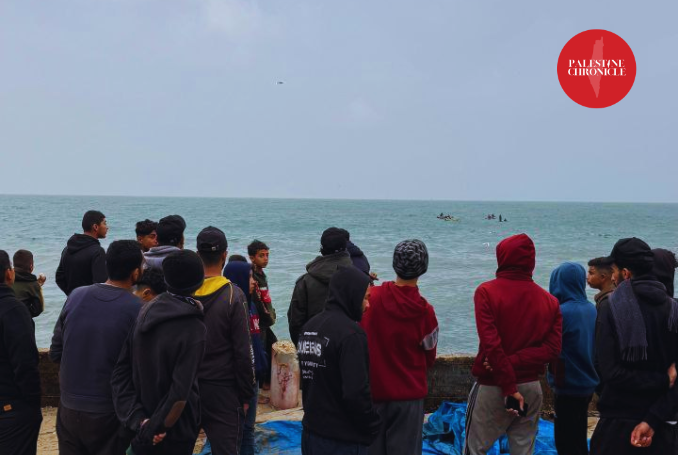
- Israeli naval forces opened fire on a fishing boat west of Gaza City and detained two fishermen.
- Casualties continue to mount despite the ceasefire framework, with hundreds killed and injured since its announcement.
- On the 130th day after the ceasefire declaration, raids and destruction of buildings persisted across the Strip.
- Rafah crossing is operating at roughly 29% capacity under Israeli restrictions, leaving tens of thousands unable to travel for medical treatment or return.
Daily Violations
Israeli violations across Gaza have not subsided despite the ceasefire arrangement, with reports describing a pattern of daily attacks rather than isolated incidents.
Israeli occupation forces shelled areas east of Khan Yunis while simultaneously carrying out demolition operations against residential buildings, Quds News Network reported.
Israeli aircraft also carried out strikes east of Khan Yunis and in Rafah in the southern Gaza Strip.
Al Mayadeen, covering developments on the 130th day since the ceasefire announcement, also reported continued raids and destruction of homes across different parts of Gaza, accompanied by Palestinian casualties and injuries.
6,000 Amputees in Gaza Face Impossible Recovery amid Israeli War Ultimatum
The outlet described a persistent pattern in which explosions, air activity and ground destruction occur daily, reinforcing residents’ inability to safely return to neighborhoods even after hostilities were formally paused.
According to figures from Gaza’s Health Ministry, hundreds of Palestinians have been killed and over a thousand wounded since the ceasefire took effect, adding to the overall toll accumulated since October 2023, with additional victims still trapped under rubble or unreachable by rescue teams.
The figures indicate that the ceasefire has functioned less as a halt to violence than as a change in its intensity and pattern.
تشييع شهيد وصل الى مستشفى الشفاء اثر استهداف مجموعة من المواطنين على ميدان بيت لاهيا شمال غزة
The funeral of a martyr arrived at Al-Shifa Hospital after targeting a group of citizens on Beit Lahia Square in northern Gaza pic.twitter.com/m78x2VeSbC— Musab Al-Shareef مصعب الشريف (@MusabAlShareef0) February 15, 2026
At Sea: Fire On Fishermen
Violations have also continued along Gaza’s coastline, one of the few areas where civilians attempt to sustain livelihoods.
QNN reported that Israeli naval boats opened fire on a fishing vessel west of Gaza City before detaining two fishermen at sea. Such incidents have become recurrent throughout the war, further shrinking the permitted fishing zone regardless of official declarations and making access to food sources unpredictable and dangerous.
Rafah Crossing: Reopening in Form
While violations continue inside Gaza, exit from the territory remains largely blocked.
Gaza’s government media office assessed the reopening of the Rafah crossing as operating at only 29 percent compliance due to Israeli restrictions, the Anadolu news agency reported.
Between early February and mid-month, only a small fraction of expected travelers were allowed to pass, including limited departures from Gaza and arrivals back into it, while others were turned back.
Palestinians Return to Gaza — Demographic Engineering Fails Before Sumud
Palestinian authorities indicated in a statement they had not been informed of the criteria used to determine travel lists, leaving families uncertain whether they would be permitted to leave for medical treatment.
The same statement noted that roughly 22,000 wounded and sick people require urgent travel abroad as Gaza’s medical sector remains devastated.
At the same time, tens of thousands of Palestinians have registered to return to Gaza, highlighting a parallel reality: while many seek exit for treatment, others seek re-entry despite widespread destruction and the humanitarian catastrophe.
(PC, Anadolu, Al Mayadeen, QNN, Gaza’s Health Ministry)


Be the first to comment