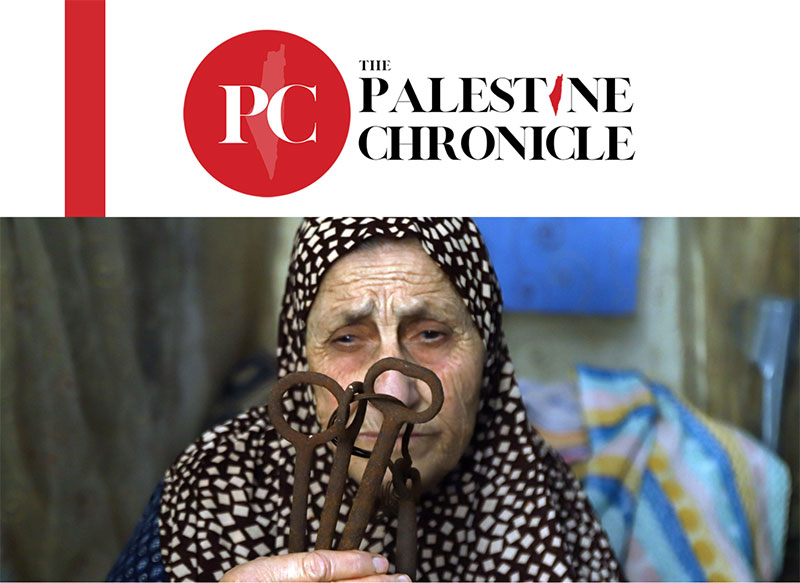
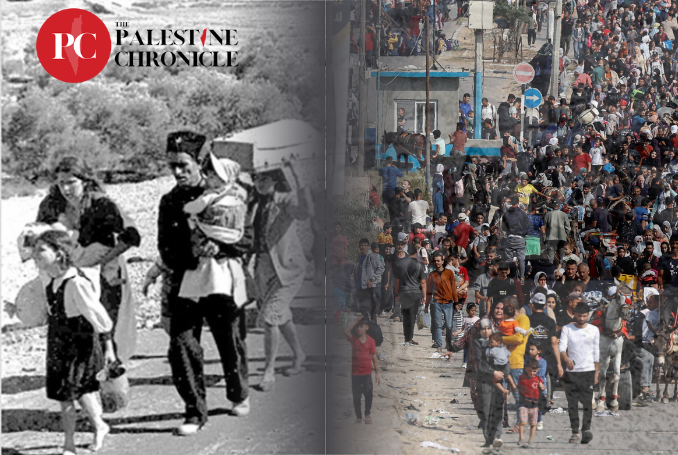
The collective memory lives on, from grandmother to grandchild, from 1948 to 2025 and beyond. The question is what we choose to do.
There is something profoundly absurd in the way the world’s leaders, time and again, choose to view Israel’s ongoing genocide in Palestine – it started with massacres already 75 years ago. In 1948, over 700,000 Palestinians were driven out of more than 500 villages, many after brutal massacres carried out by Jewish terrorists. It was in this chaos that the state of Israel was established.
I have recently returned to the book All That Remains, first published in 1992 and reprinted several times since. On more than 600 pages, the fate of each village is documented: its history, how the inhabitants were expelled, and what happened to the place afterwards.
Reading it now, in the year 2025, is a shattering experience. Every page is a reminder that these villages were once living communities, full of people who had dreams of the future. Then came the catastrophe – al-Nakba – when dreams were transformed into a state of eternal suffering and an endless longing for something that no longer exists, something destroyed.
The phone rings. I see no number.
“Hello, who are you?”
“Call me K. I’m calling from Gaza.”
I am silent for a moment.
“Do I know you?” I ask.
“No,” answers K, “but we’ve met.
” He goes on: “Do you remember the old man, the chess player? You know, the old man you used to meet down by the Al
Deira Hotel, near the sea.
“Yes,” I say, “of course I remember him. He used to sit there with two other older men; they were always playing chess.”
“Do you remember a little boy who used to bring coffee and homemade bread?”
“Yes, of course I do. I remember a cheerful twelve-year-old – was that you?”
“Yes, that was me,” says K. “But now I have a family, a wife and three children. Until recently,I also had a home, a safe place, something to return to. I no longer have that. We were forced out in 2024 from our house just before Israeli terrorists destroyed it.”
“Why are you contacting me?” I ask.
“The old man, the chess player, was my grandfather. He asked me to contact you. I promised him I would, and now I’m doing it. He died a few months ago. In the middle of an Israeli attack, he was one of many who died that day. We had been forced to leave Gaza City. We walked slowly because grandfather was old and tired, so it took longer.
One evening, during the march, he began to speak, to tell us about a journey he had once made with his father, mother, and siblings. He began by saying: ‘I have made this journey before. Then I was twelve years old. It was 1948. We too were driven out by terrorists.’
He had never spoken about that time; it had always been too difficult, too heavy. But now, during Israel’s actions, everything changed. He felt his time was running out, and suddenly it became important for him to tell us, to make us understand what he had lived through. At the same time, he was saddened that his children and grandchildren were now being forced to go through what he himself had experienced – as he said, the same terrorists, only now much worse.
Grandfather said that he had thought about it every second, day and night, and he was heartbroken when he realized that we were now going through the same trauma.”
“Why are you calling me?” I ask again. “It’s been so long since we met, almost 20 years.”
K repeats that it was his grandfather’s wish. He said that the old man had got the phone number already during the first meeting. The chess player had told K to try to contact me, to retell what had happened in 1948 and what is happening now. The call broke off in the middle of our conversation.
I hoped he would call again. Hoped nothing had happened to him. I now had time to think back to my meetings with the chess player. I searched through my notes and began digging into my memory. I began writing down what I remembered.
It was late afternoon. The year was 2004. Soon the sun would set over the Mediterranean. Everything was still, beautiful. At the same time, Gaza was a worn-down place with a worn-down, oppressed, and impoverished people. In my notes I had written: “Some young boys are playing football; an old man is on his way home with his fishing rod and a bag of fish. Three women come down to the beach and call out to their boys. I am about to head back to the hotel. Over there, some men are sitting and playing chess. Soon the call to prayer will sound, the sun is beginning to sink, the sand is warm.
Above our heads floats a large balloon, tethered to the ground with a cable, following what happens below, monitoring all my movements and everyone else’s. I knew it was an aerostat, but I came to call it “an eye in the sky” – one that sees everything, hears everything, documents everything, capable of photographing me or intercepting my phone calls.
It became clear that just knowing it was always above me made me cautious. I moved differently. Walked slower. Several of my friends no longer wanted us to meet outdoors. At the same time, the balloon made it clear that there was no such thing as being “out in the open.”
I had a day off that Friday. First, I walked south along the road toward Rafah. I didn’t get as far as I had hoped. I was invited into a family’s home for strong coffee; the coffee led to a conversation about what had happened in Bethlehem in 2002. Since I had only arrived in Palestine in 2004, I didn’t know much about the events in Bethlehem. My host became the storyteller, and I listened. His brother, who was Christian and lived in Bethlehem, had told him about those terrible days around the nativity scene in Bethlehem.
The Church of the Nativity had been under siege for five weeks. Israel had cut off electricity, water, and food supplies. Palestinians inside the church were detained. Some were sent to Gaza, others were imprisoned. There were also some international activists in the church who were expelled from the country. My host had wished that I could confirm, add to his account, but I was the one trying to understand, taking in all the information and trying to process my experiences.
I thought I was well prepared for my new assignment at the Swedish Consulate in Jerusalem. I had gone through a number of books, watched many old films, asked questions to people at the Ministry of Foreign Affairs, Sida, and various Swedish organizations, and met with people who had broad knowledge of the situation in Palestine and Israel.
After arriving in Jerusalem, I continued searching for a reasonable explanation for the Israeli crimes that I began to witness, crimes that had been going on for so long. I was searching for something I knew was there but had difficulty finding. I travelled north, to Qalqilya, where the wall – that dreadful wall – had just reached. I began to see the violations, violations led by Sharon and his criminal gang, but carried out by young men and young women. Women and men who were in the completely wrong place – who should have been in school, at university, or at work building a future, not being broken down by their own violence and oppression. I began to realize that for a long time I had been deceived, that someone had not known, not understood, or simply lied to me. It felt as if many had not wanted me to understand what lay behind the Palestinians’ situation. And I, I had believed them.
It was my second visit to the Gaza Strip. I experienced stark contrasts in the encounter between the occupier’s young boys and girls at the Erez crossing and all the Palestinians who lived under Israeli oppression. Erez is an unpleasant place where young women and men openly show that they trust no one, the tone is harsh and unfriendly.
It was as if the young Israelis had taken a basic course in how to humiliate the other. Everything seemed to be permitted. The feeling I got was that I was reliving my short visit to Moscow in 1975. Moscow was then a place where important democratic principles were absent.
I fully understood how terrible the Palestinians’ situation was, but at that time, I did not understand the situation of the oppressed, but I could sense it.
Each day I became more observant of what I saw. I paused, waited, sometimes sat still for long stretches, just watching, letting time pass while the humiliation grew clearer and clearer. Even though, as a diplomat, I had privileges and was spared the violations, I constantly felt ill.
When I saw what was happening, when I saw the fear in Palestinians’ eyes, when I sat for a long time watching the gaze of the young Israeli woman as the old man was humiliated, when he was taken aside to wait once more, a wait that could last who knows how long. She made use of the opportunity to be arbitrary: to approve or not, to let in or to shut out. She looked straight through me, I did not exist but I saw her eyes, saw a terrifying joy, a happiness on the edge of madness.
At that moment, I recalled what the artist Sigfrid “Siffran” Södergren had once taught me in Congo: “Mats, you must have patience. Do not rush. Sit down. Observe the poverty, the oppression. Do not look away when people are humiliated. Do not leave – stay as long as possible, remain still. Sometimes you should put the camera back in the bag.”
Yes, I remember the chess players I met when I was just on my way to the Al Deira Hotel, a beautiful boutique hotel. One of the men called me back. We greeted each other, and he said he wanted to offer me a cup of coffee. He said he had seen me that morning when I was walking south. He pulled out a white plastic chair and asked me to sit down. The back legs sank into the sand. He was waiting for his turn to play a game. A small boy came with coffee and homemade bread. The bread was warm. The man poured me half a cup of coffee. Behind me was a house wall that the sun struck. It was warm, while a cool breeze cooled me slightly. The wall was painted yellow, but the paint was beginning to peel. The yellow was fading into a pale pink.
I asked my host if he had lived long in the Gaza Strip. He told me that he was twelve when he came here, in 1948. “We, all three chess players, were forced here in 1948,” he said. “I came with my parents.” The old man, who had just started a new game, moved a pawn and reluctantly began to tell me about another time, about a house in a village east of Tel Aviv. He recalled the beauty and his parents’ strength at that time. Of how the elders, together with relatives and friends in the village, had built up a community with everything a society needs. He mentioned safety and dreams. There was a small natural pool in the village, just in front of the mosque and near their house. The water flowed from the little mountain outside the village.
Their house had two floors. The upper floor was more private, and on the ground floor, much of the beautiful was gathered: fine wooden furniture, paintings on the walls, thick rugs on the floor. It was a time when his grandfather was an important person in the village, also an important figure in the mosque. He had also been behind the building of the small school. I asked him why his family had fled. But then he became silent. He didn’t want to speak about it.
I came to meet him on several occasions, but he never wanted to tell me about that day. He could manage to speak about all the beautiful things, he could dream himself back there, but never about the difficult part. He never told me about the day when the Jewish terrorists drove away his family’s hopes for the future. He didn’t want to talk about what he had relived every day and every night since 1948.
I returned to Gaza with some regularity. I would find him when he was playing chess with his friends. The same spot, always three people. It was then, for the first time, that I truly understood that almost everyone I met when visiting Gaza was a refugee. Either they had fled themselves, or they were children of refugees. They all share a common history.
It struck me, as I sat there talking with my host, that Ben Gurion had been terribly wrong. He had promised that the old would die and the young would forget. How wildly mistaken he was. Yes, the old do die – that is our fate – but the young will not forget. They will carry with them a shared history that will never be forgotten, one that will never die. Israel may kill and destroy much, but they have never understood the strength of collective memory.
Now Israel is adding to that collective history with yet more suffering: over 60,000 murdered, almost everything destroyed, and what has already been bombed to ruins is bombed once more. The suffering is so immense that it cannot be described. Many of us try, but we all fail.
I think of all those who have lost an arm, a leg, an eye – not to mention those who survived, but only into a life of psychological darkness. Reports arrive every day. Just this morning, about crushed small children, children whose bodies had been shredded by shrapnel.
K calls again. By now several hours have passed. He tells me that they had followed the Israeli instructions for safe shelter, and with his family he had gone south. When they arrived in the so-called safe zone, for a few hours it felt secure, quiet – no bullets whistling through the air. But it didn’t last long. Soon they, too, were fired upon, once again from the air. It turned out that Israel does not keep the promises it gives. He didn’t put it in those words, but it felt as if he wanted to say that he was constantly living inside the Israeli lie. That lying had become the of the President in Israel. One could call it the politics of lies.
Where he was now turned out to be just as dangerous as Gaza City. When they had walked south, they had seen many dead people – women and children – and even more injured. K says that it was then his grandfather began to tell his story. He went back to another time. The great war was over. Large parts of Europe lay in ruins, and now it was their turn. What had happened across Europe – all the destruction, all the killing, all the suffering – was now happening in 1948 in Palestine. Grandfather’s story, K says, resembles so much of what they themselves are experiencing now.
The terrorists had 1948 woken the village by firing shots at the rooftops. They forced the families out of their homes, made them hand over everything – they were only allowed to bring one suitcase per person. There was much screaming and harsh words from the terrorists. They gathered all the people in the small square, threatened and beat his father, threatened his mother, and frightened the children. All the animals had to be left behind.
There were some who refused to leave their homes – they were taken away, and some of them they never saw again. They were filled with fear, terror, and despair. The terrorists were heavily armed and prepared to use their weapons. It was only once everyone was gathered that things calmed somewhat. They were also promised they would soon be able to return. The elderly and sick, those who could not walk, were lifted onto trucks and taken away. Some of them did not come back.
We, K and I, promised each other we would talk again as soon as possible. I had many questions. Unfortunately, there have been no more conversations. K has not called back, and I don’t know why. The most likely explanation is that the network has gone down where K is. I can only hope that is all it is. If not, he might have been killed.
It becomes painfully clear that we do not learn from history, neither from others’ nor from our own. 1948 and 2025 resemble each other in ways that are disturbingly alike. Israel uses the same methods. Then, as now, the message was: leave or die.
This is not about a state that wants to be part of a global community where together we build a better future. Already in 1948, just after the Great War had ended, the actions of the terrorist organizations were permeated by violence. And the violence has continued. Year after year, violence has triumphed, while Israel has expanded economically, politically, and militarily. For a long time, Israel has also had the international community at its side. But they seem not to understand that time has passed. The horrors of the Second World War lie far behind us. It is not self-evident that Israel will continue to enjoy the support that has been taken for granted since the ravages of Nazism.
In the same way that German Nazis, after the Second World War, tried to hide their actions by fleeing, creating new identities, and avoiding confrontation with their past, Israeli soldiers will carry with them terrible memories.
The young women and men who today take part in expulsions and killings in the West Bank or in Gaza will remember. They will remember the shots fired at defenceless women and children, or how they stood by in silence when settlers drove innocent families from their homes. The settlers’ children see what their parents are doing. What they witness will sink in, return, and haunt them for the rest of their lives.
What happened in 1948 is not just history – it is the present. Al-Nakba never ended. It is still ongoing, in every bombed street, in every lost home, and in every child who grows up with the same fear that their grandparents once carried. This is what we must understand: violence and expulsion do not create security – only new generations of grief and hatred. No wall, no army, no lies can erase the memory of injustice.
The collective memory lives on, from grandmother to grandchild, from 1948 to 2025 and beyond. The question is no longer what Israel does or does not do. We all know that we get daily reports. They can be read in Ethiopia, Bangladesh, Canada, Laos, or Sweden, everywhere.
The question is what we choose to do – we who see, we who know, we who can no longer say that we did not understand.
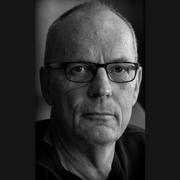
– – Mats Svensson, a former Swedish diplomat has been following the ongoing occupation of Palestine since 2003. He is the author of “Crimes, Victims and Witnesses – Apartheid in Palestine.” (Real African Publishers) and “Apartheid is a Crime – Portraits of Israeli Occupation,” (Cunepress, 2020). Mats contributed this article to Palestinchronicle.com. Mats can be reached at isbjorn2001@hotmail.com