
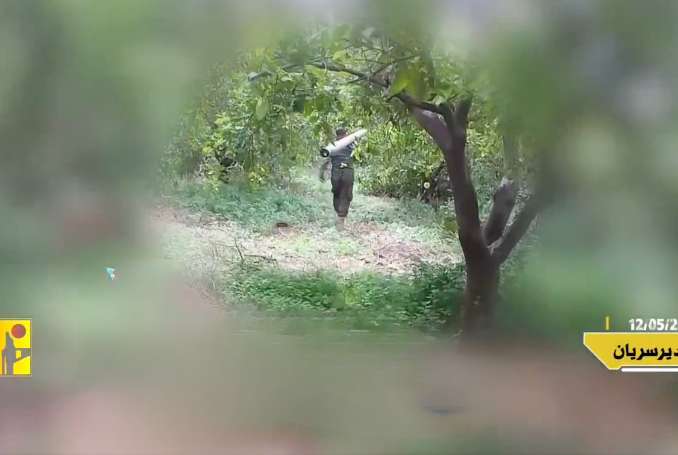

Hezbollah announced multiple operations, claiming Israeli forces remain unable to secure gains despite months of fighting in South Lebanon.
Key Developments
- Hezbollah announced a series of operations targeting Israeli troops, vehicles, military sites and settlements.
- The movement said resistance fighters repelled Israeli forces attempting to advance near Dabbin.
- Hezbollah reported destroying military vehicles and damaging two Merkava tanks.
Israeli Advance Stalled
The Lebanese resistance movement Hezbollah announced on Saturday a series of military operations targeting Israeli troops, military infrastructure and settlements in northern occupied Palestine, while sources told Al Mayadeen that Israeli occupation forces remain unable to consolidate gains despite months of fighting in southern Lebanon.
According to statements issued by Hezbollah, resistance fighters carried out attacks against Israeli troop concentrations, military vehicles and command centers, while also launching rocket barrages and drone operations targeting settlements and military sites across northern occupied Palestine.
Hezbollah said its fighters ambushed an Israeli force attempting to advance toward the outskirts of the town of Dabbin on Saturday morning.
According to the movement, resistance fighters detonated an explosive device before engaging the force in two separate clashes using light and medium weapons, ultimately forcing the Israeli troops to withdraw.
Hezbollah Strikes Safad – Here Is the Latest from the Lebanon Front
Later Saturday evening, Hezbollah announced that it had targeted a concentration of Israeli soldiers and military vehicles in the Arid Dabbin area with artillery shells and rocket barrages.
The movement said the attack damaged two Merkava tanks and forced the targeted force to retreat.
Hezbollah added that its fighters have been confronting Israeli attempts to advance toward the outskirts of Zawtar al-Sharqiya, Yahmar al-Shaqif and Dabbin since Tuesday, using what it described as complex operations involving multiple types of weapons.
According to the movement, Israeli occupation forces have suffered significant losses in personnel and equipment without succeeding in taking control of the towns.
Drone and Rocket Attacks
Hezbollah also announced several drone operations throughout the day.
At 5:45 PM, fighters targeted an Israeli D9 military bulldozer on the southeastern outskirts of Zawtar al-Sharqiya using an Ababil attack drone.
Earlier, the movement said it destroyed a Yaghi military vehicle near Yahmar al-Shaqif using an Ababil drone and later struck a Merkava tank in the same area.
In northern occupied Palestine, Hezbollah announced rocket attacks targeting military infrastructure in Nahariya and the occupied city of Safad.
The movement also reported targeting the Israeli military command headquarters in Naqoura and the Ya’ra barracks with swarms of attack drones.
Additional rocket barrages were launched toward Kiryat Shmona and military infrastructure in Karmiel.
Israeli Channel 12 described Saturday as one of the most violent days on the northern front since the ceasefire, citing dozens of rocket warnings and continuous fire toward the Galilee.
Questions over Israeli Gains
Meanwhile, sources speaking to Al Mayadeen challenged Israeli claims regarding recent advances toward the Litani River.
According to the sources, what Israel has presented as a significant battlefield achievement amounts to a limited advance achieved only after approximately three months of fighting and extensive destruction.
Hezbollah Strikes Kiryat Shmona, Meron amid Growing Israeli Casualties
The sources said Israeli occupation forces advanced along the narrowest routes closest to the Lebanese-Palestinian border, noting that the distance between their starting positions and the Litani River was approximately three kilometers.
They added that Israeli occupation forces spent nearly three months occupying roughly eight villages along the axis of advance, including Al-Adisa, Kfarkela and Rab Thalathin, areas they said had already been extensively destroyed and no longer contained civilian populations or active resistance positions.
According to the sources, Hezbollah inflicted heavy losses on Israeli occupation forces throughout the campaign despite the deployment of forces equivalent to a division, including elite units from the 36th Division and the Golani Brigade.
‘Scorched Earth’ Strategy
The sources further said that Israeli forces relied heavily on a scorched-earth strategy, using overwhelming firepower to destroy built-up areas along the Litani River rather than engaging in sustained direct confrontations.
They argued that Israeli troops continue to face insecurity in rear positions and have been unable to establish lasting control over areas entered during the operation.
Regarding the Zawtar al-Sharqiya and Yahmar al-Shaqif axis, the sources said Israeli troops remain positioned on the southern outskirts of the towns and have not succeeded in securing full control, while resistance fighters continue to engage them in ongoing clashes.
Al Mayadeen’s correspondent in southern Lebanon similarly reported that Israeli occupation forces remain unable to advance deeper into the operational area because of continued resistance attacks targeting troop concentrations and advance routes.
According to the correspondent, fighting continues in an area located roughly three to five kilometers from the Palestinian border, where Israeli troops have repeatedly attempted to advance but have so far been unable to establish a permanent presence inside the targeted villages.
(PC, Al Mayadeen)



Israel’s committing a lesser form of the Napolean Moscow mistake, by stretching its supply lines across a territory busily contested. I don’t expect Israel will stay there for long.